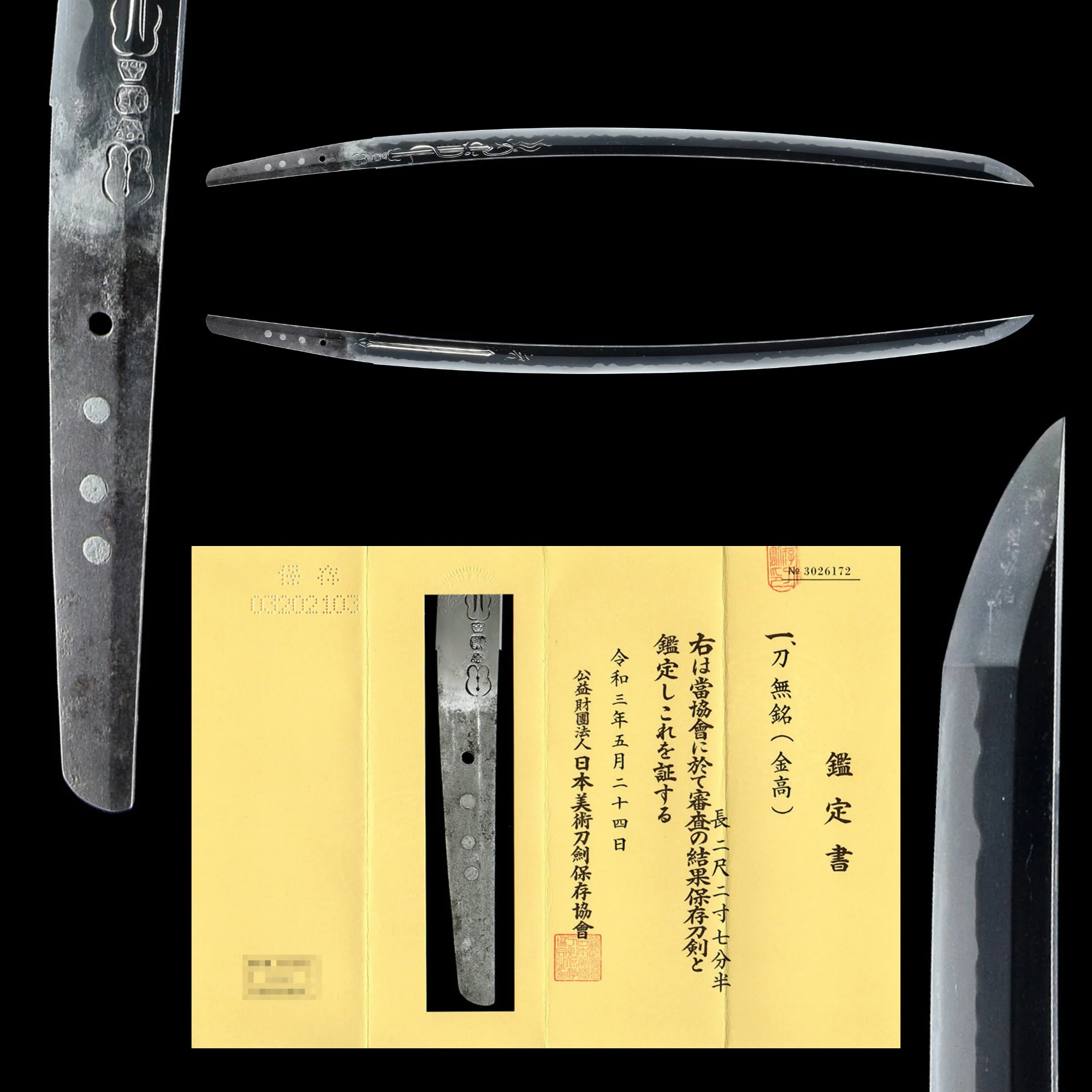
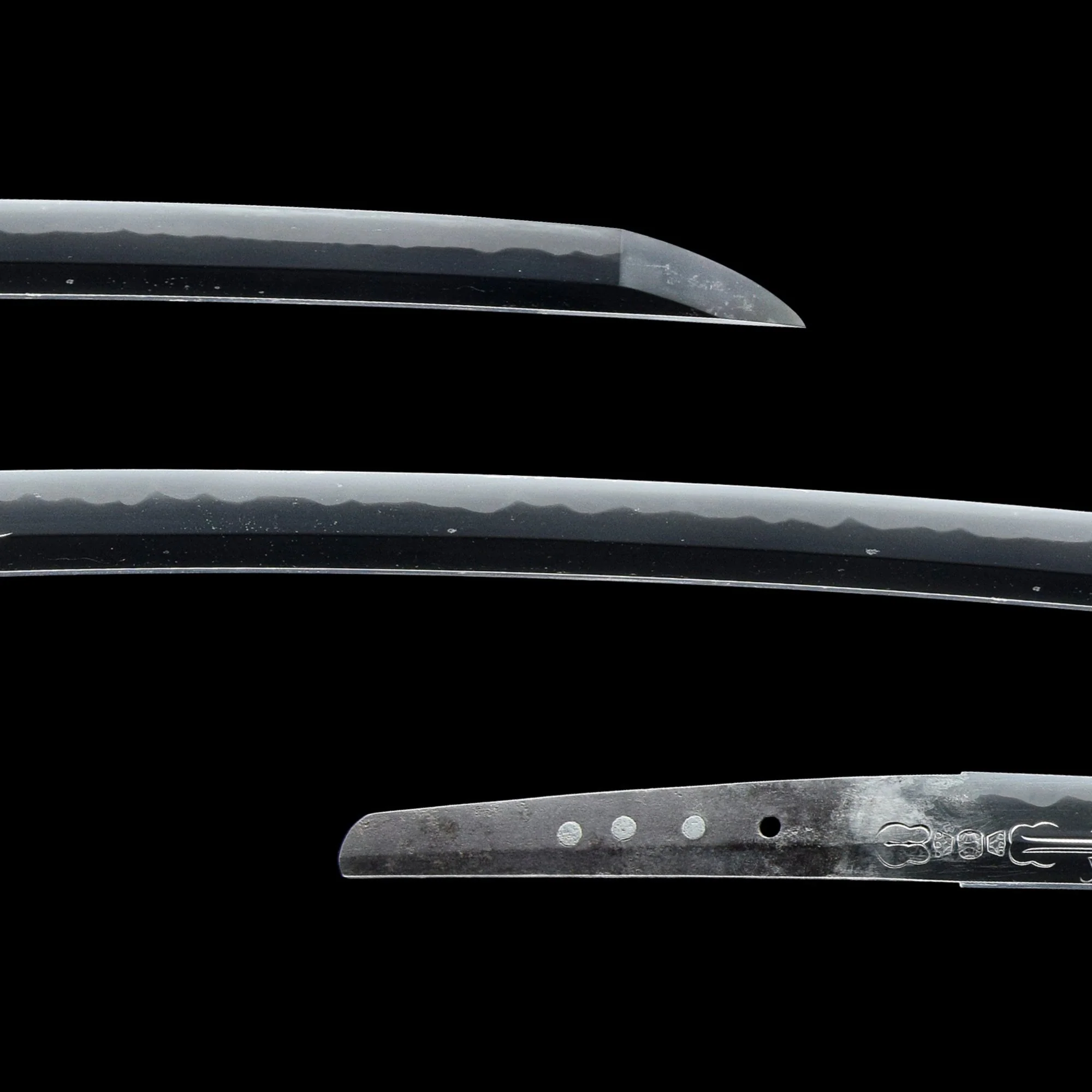
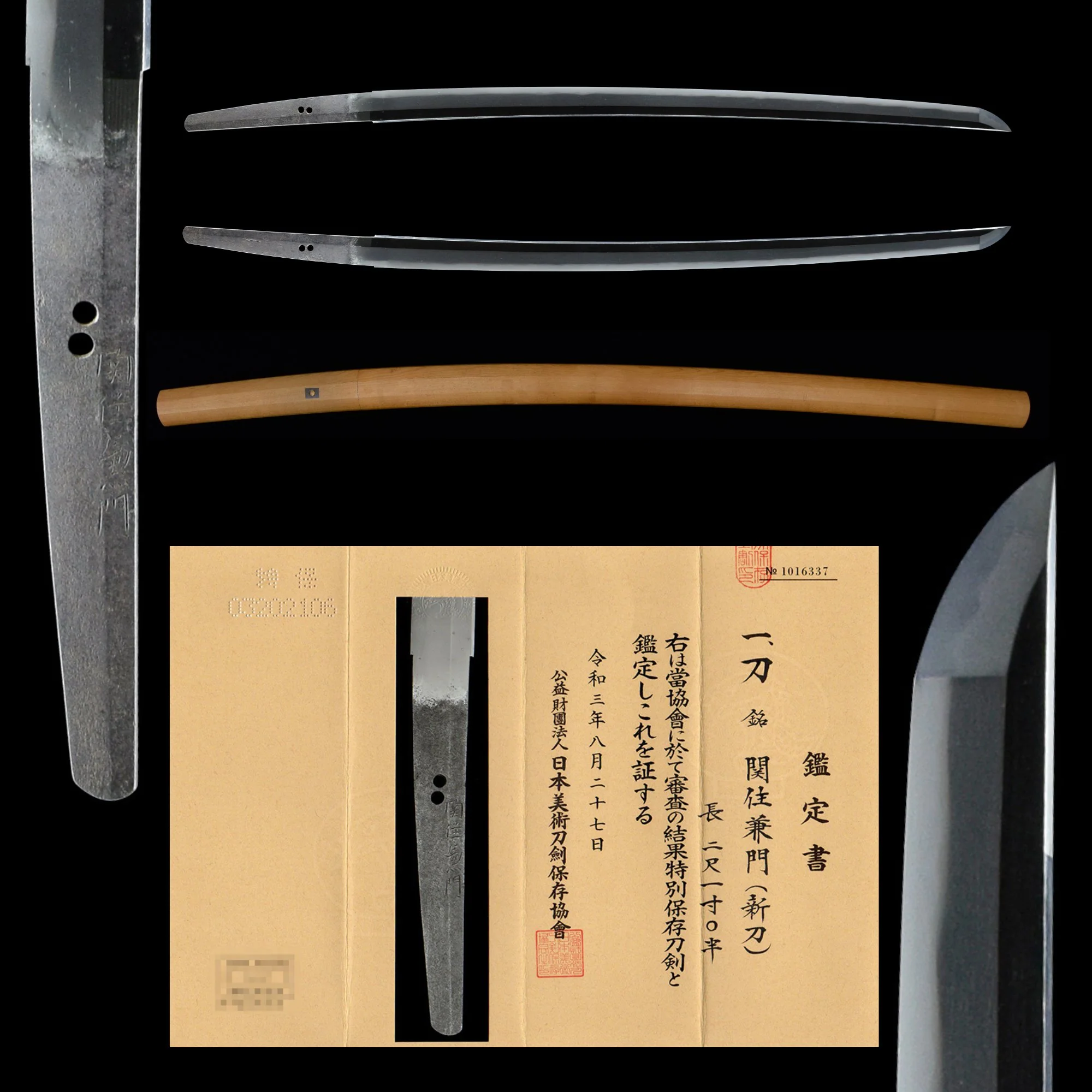
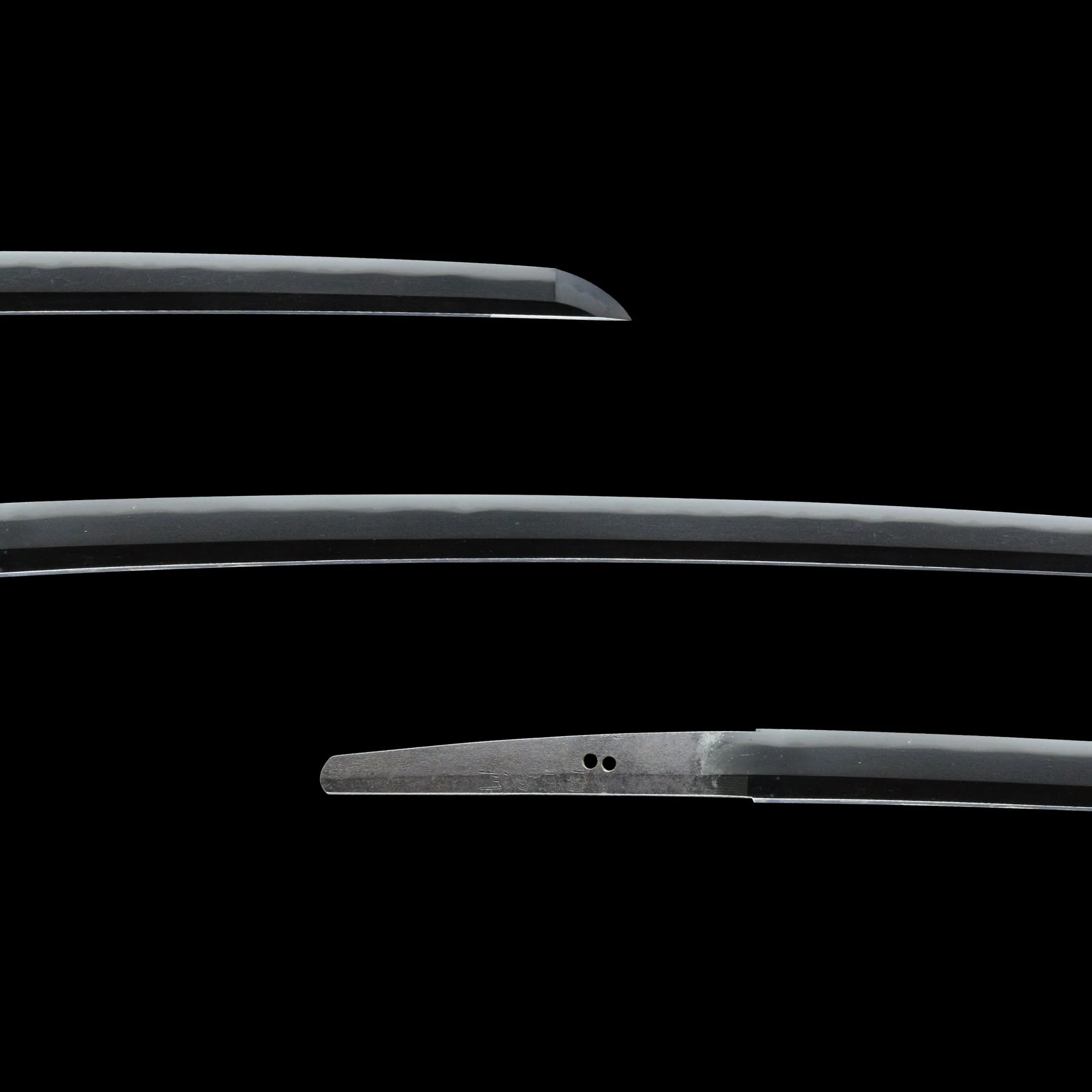
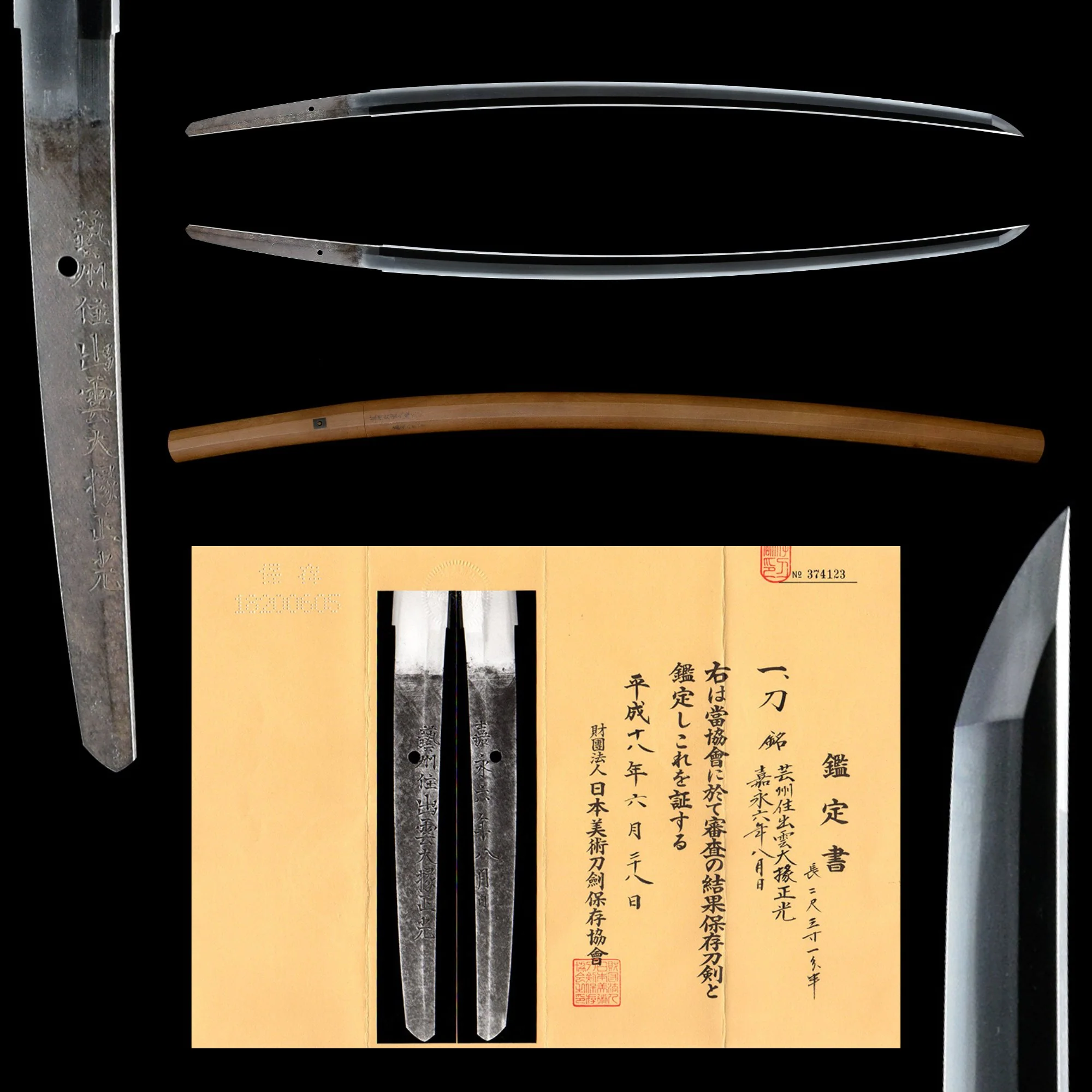
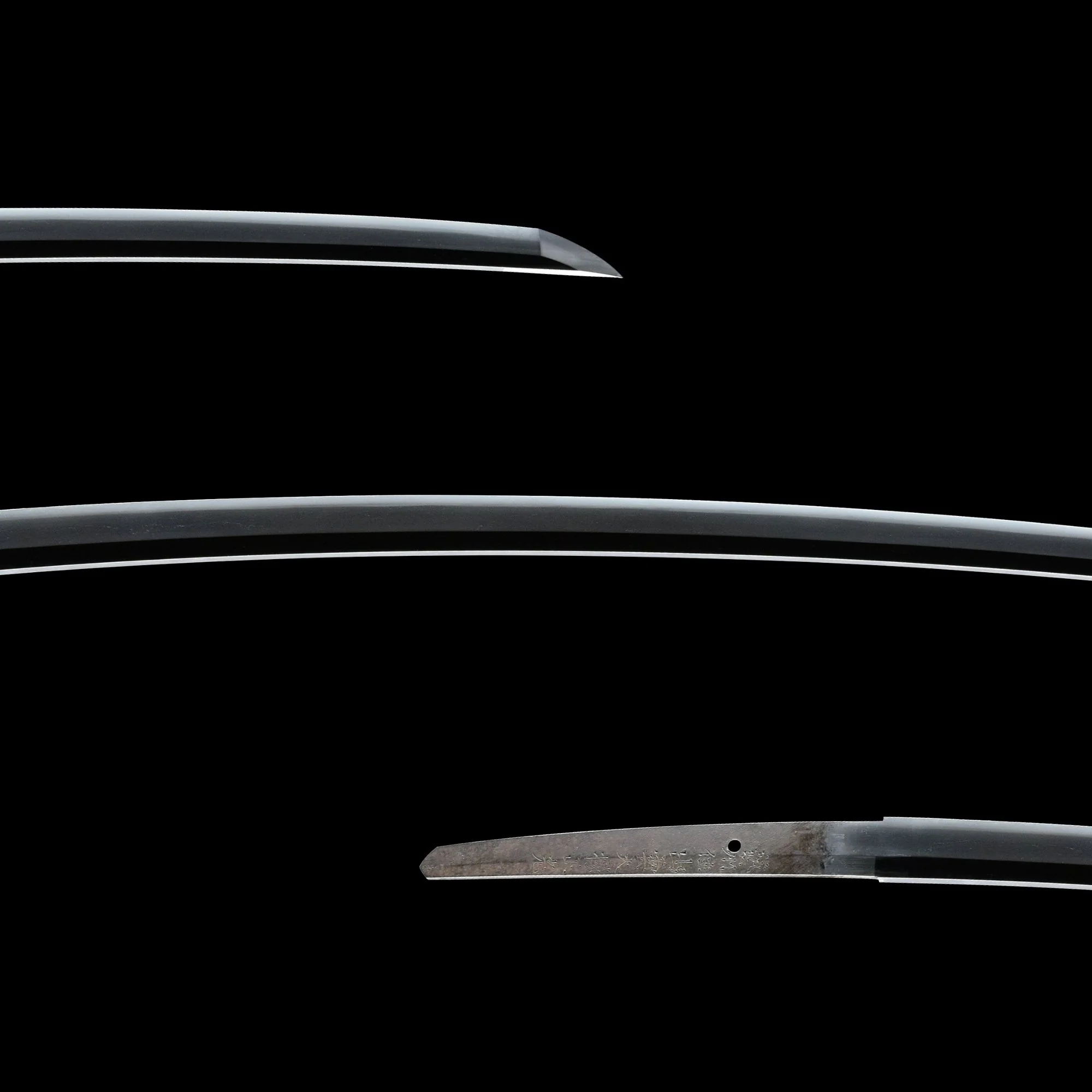
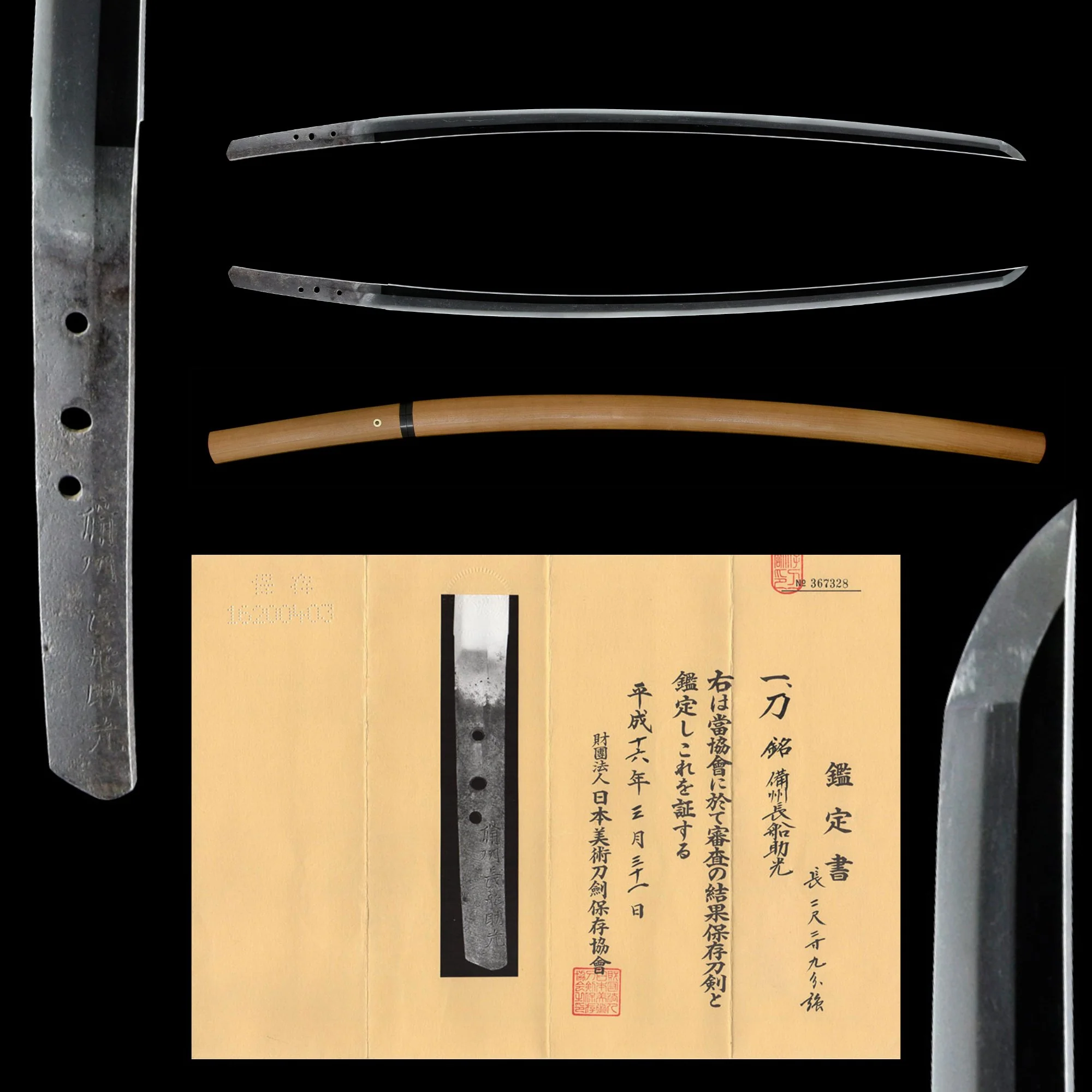
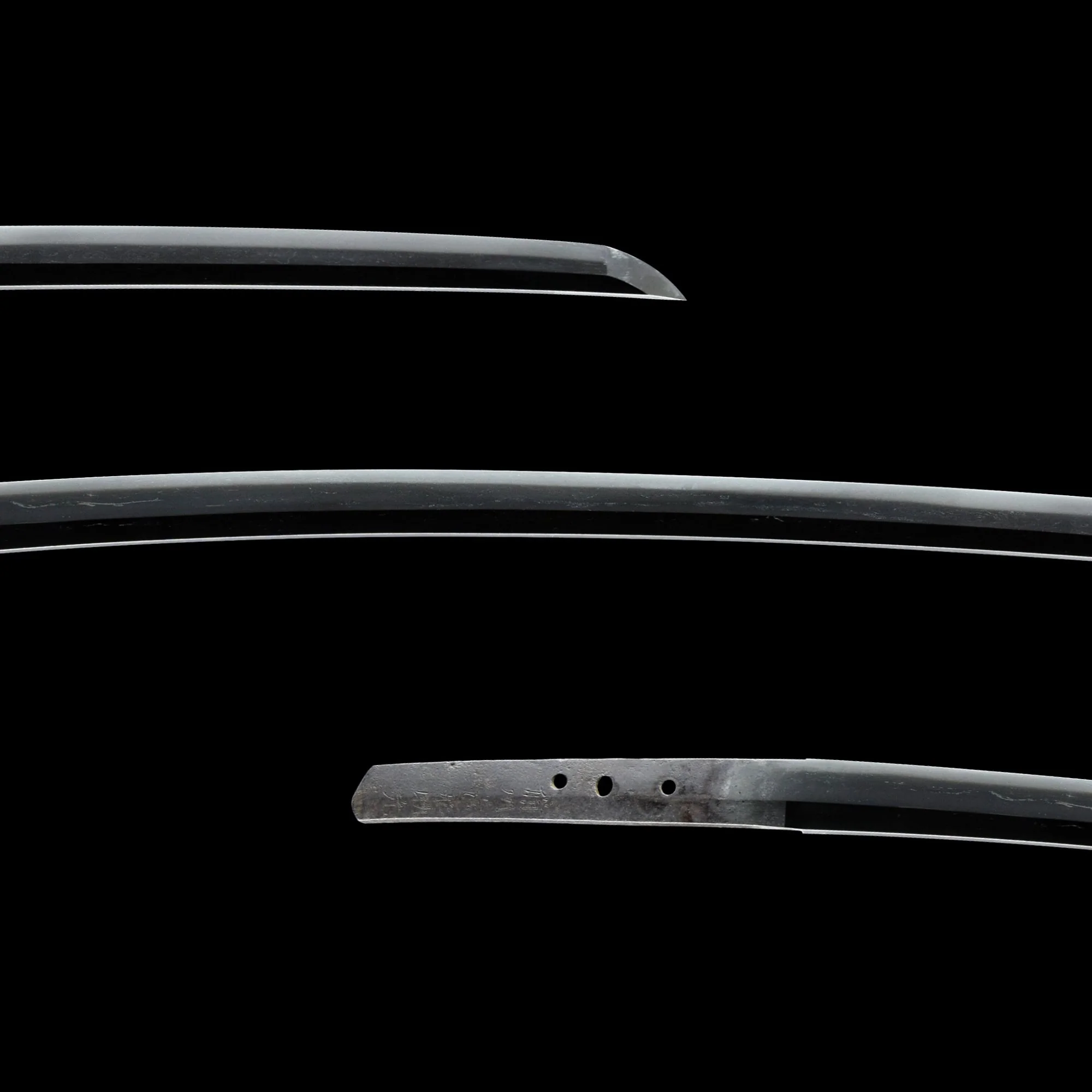
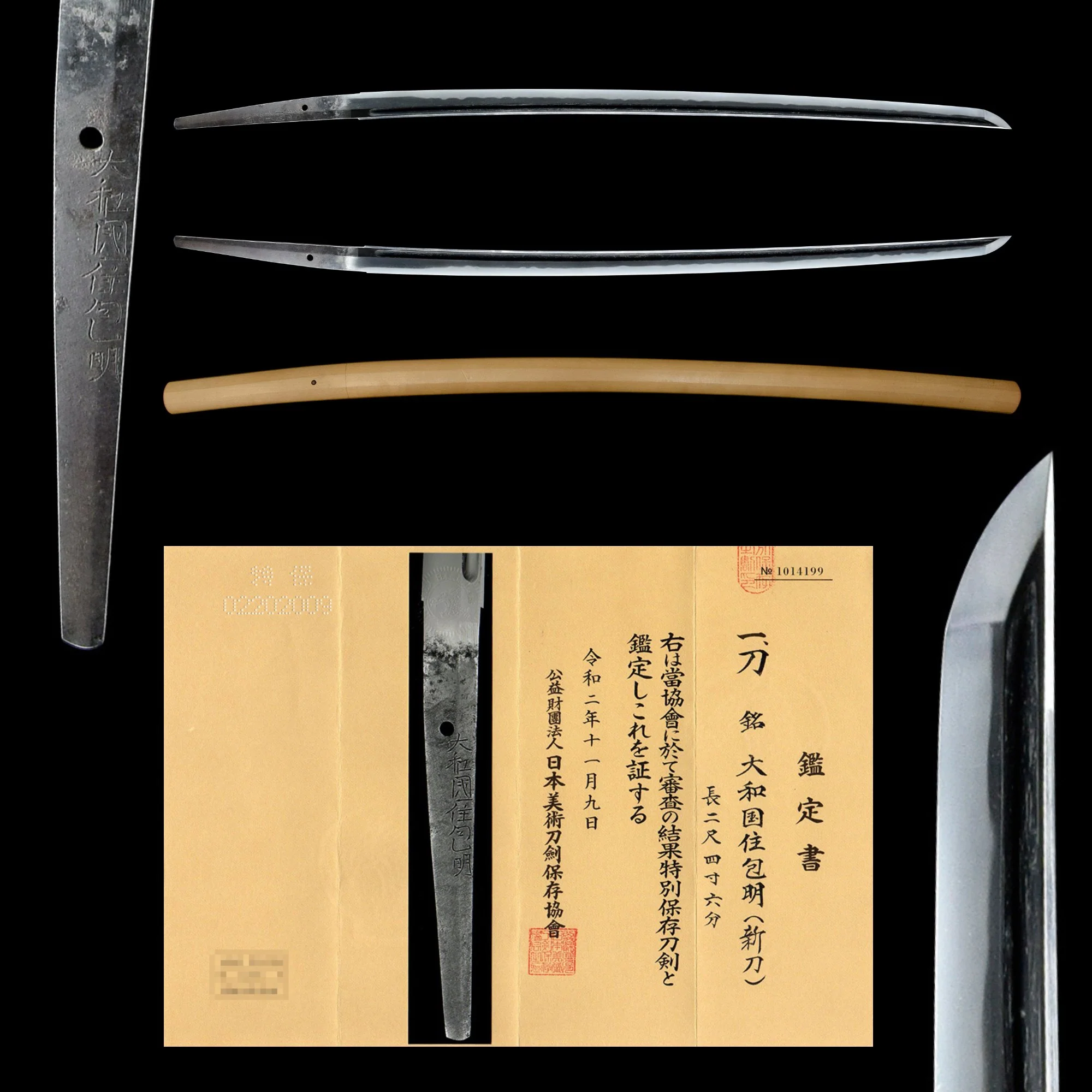
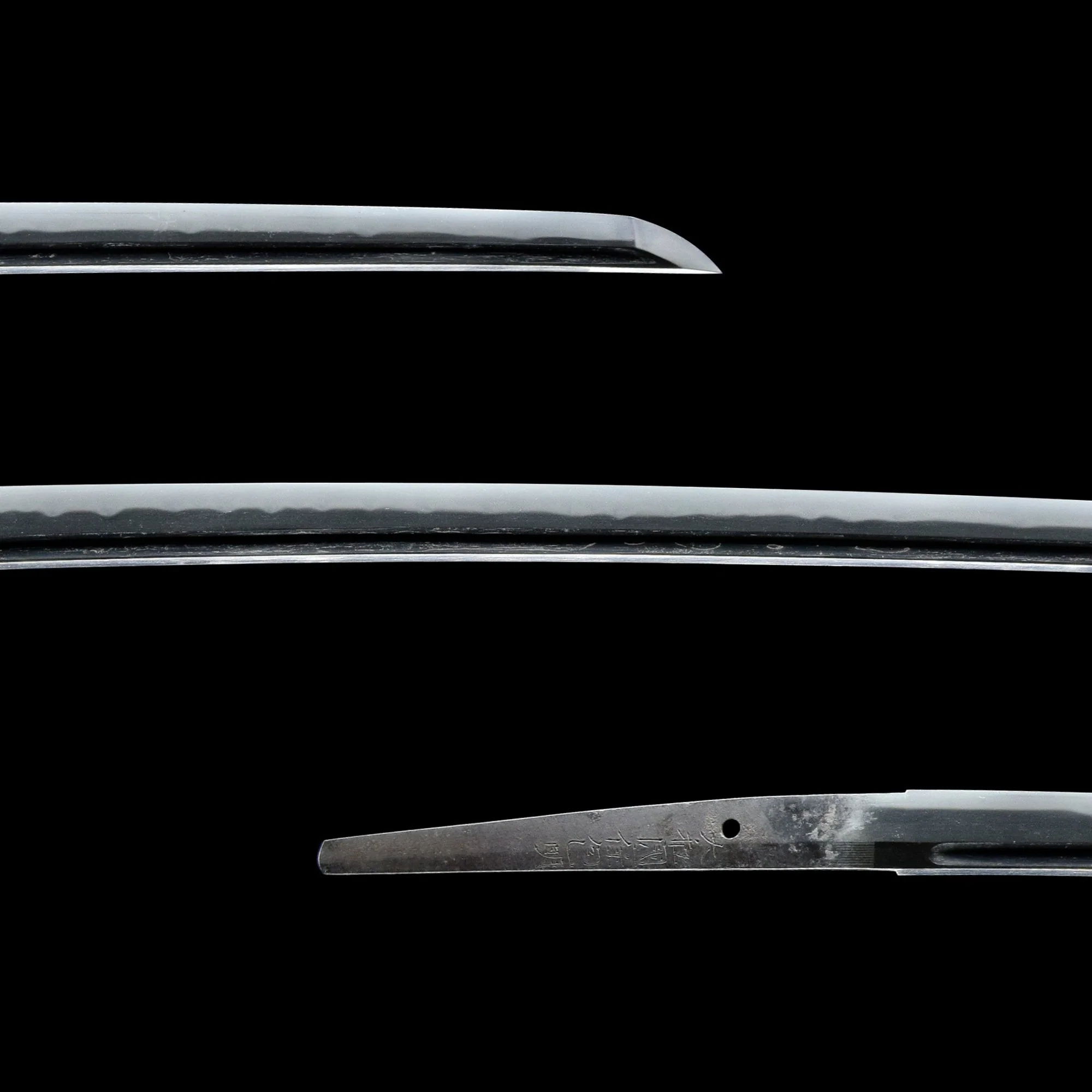
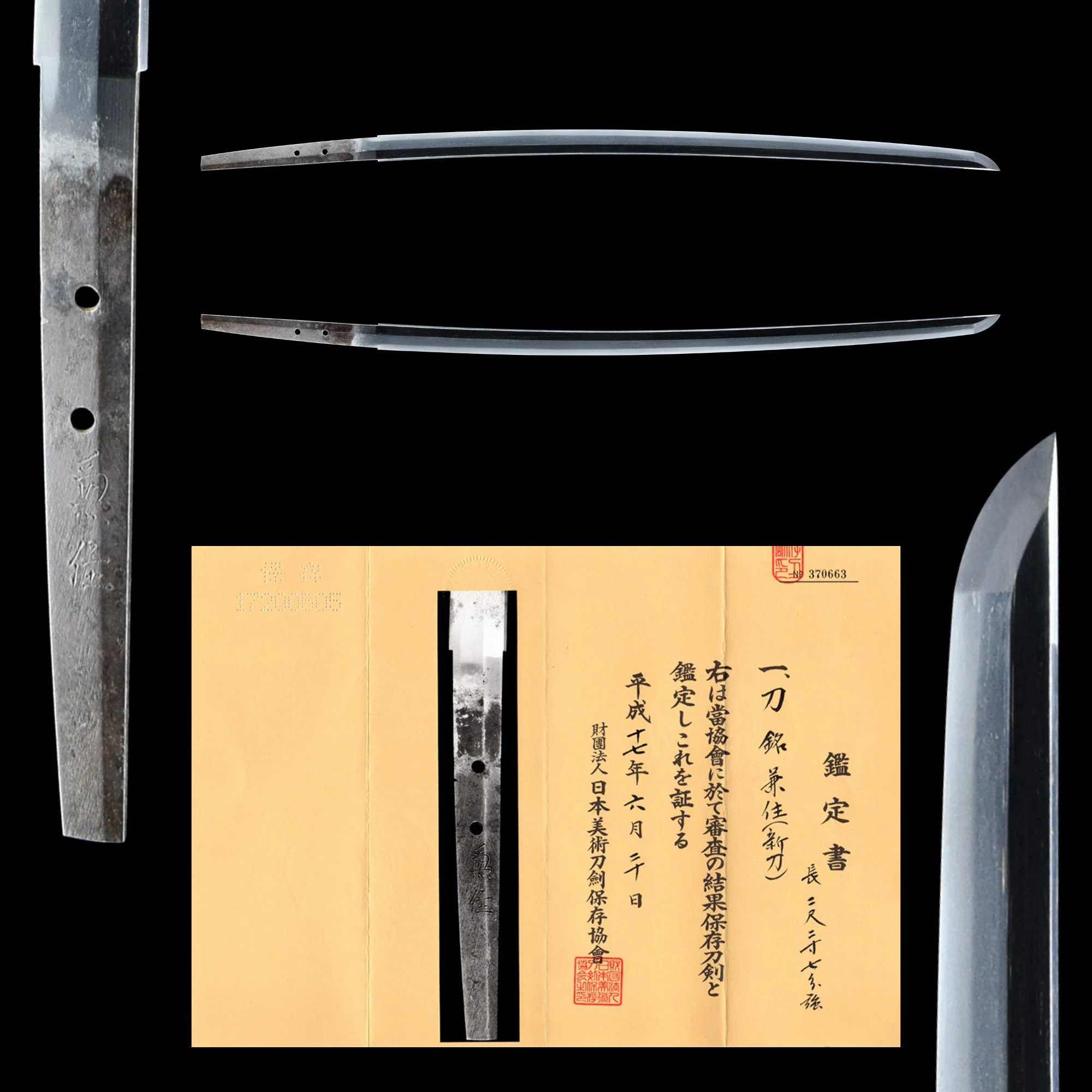
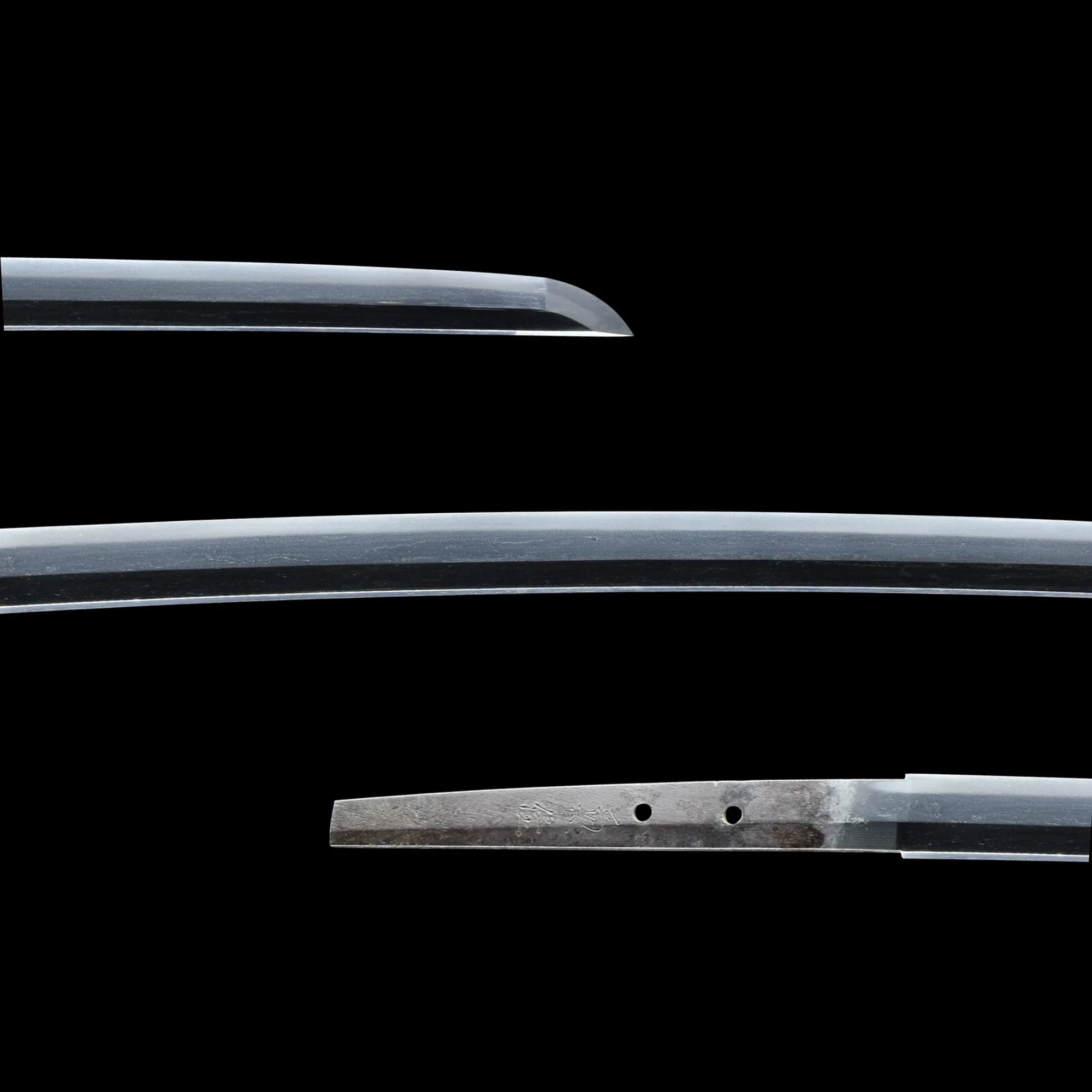
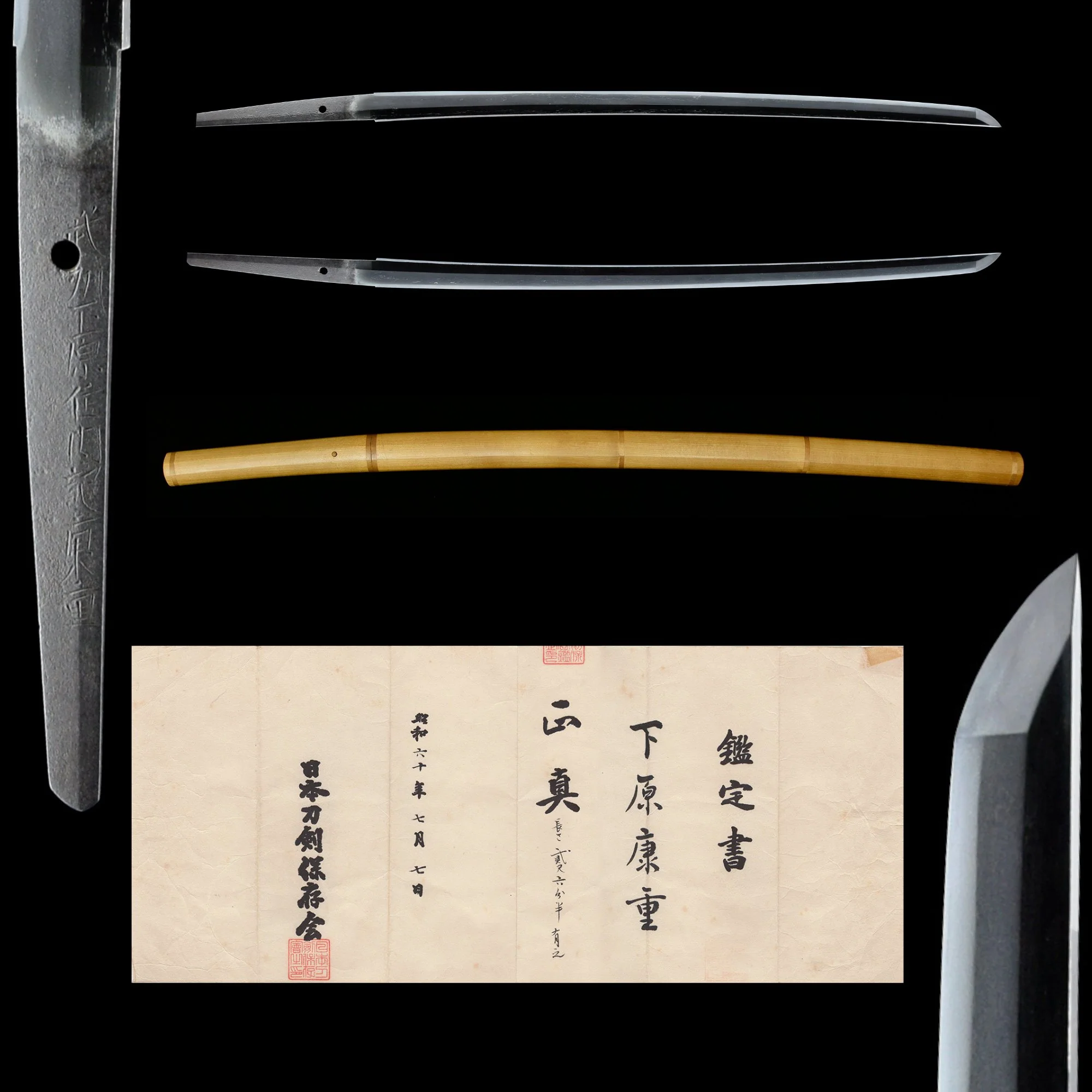
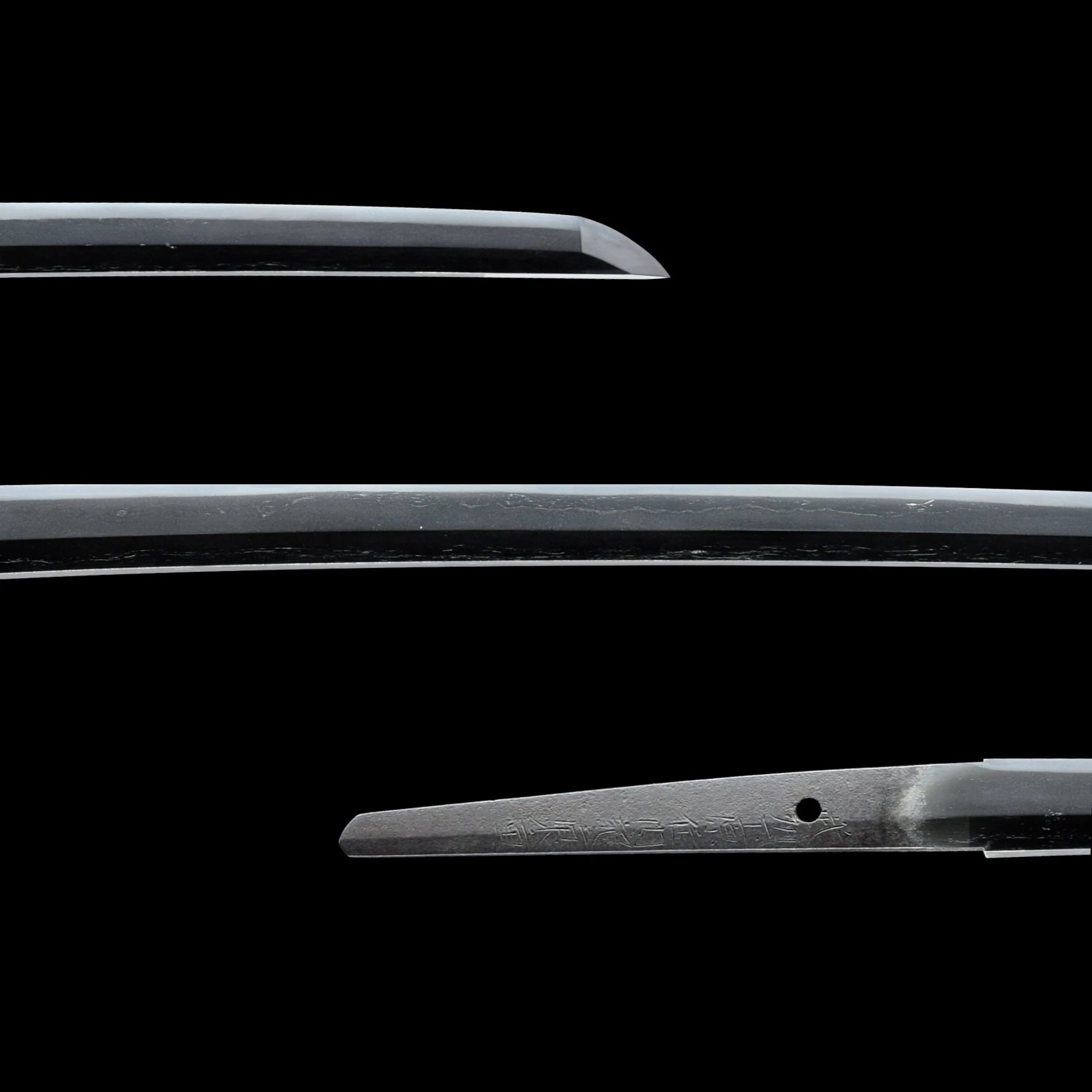
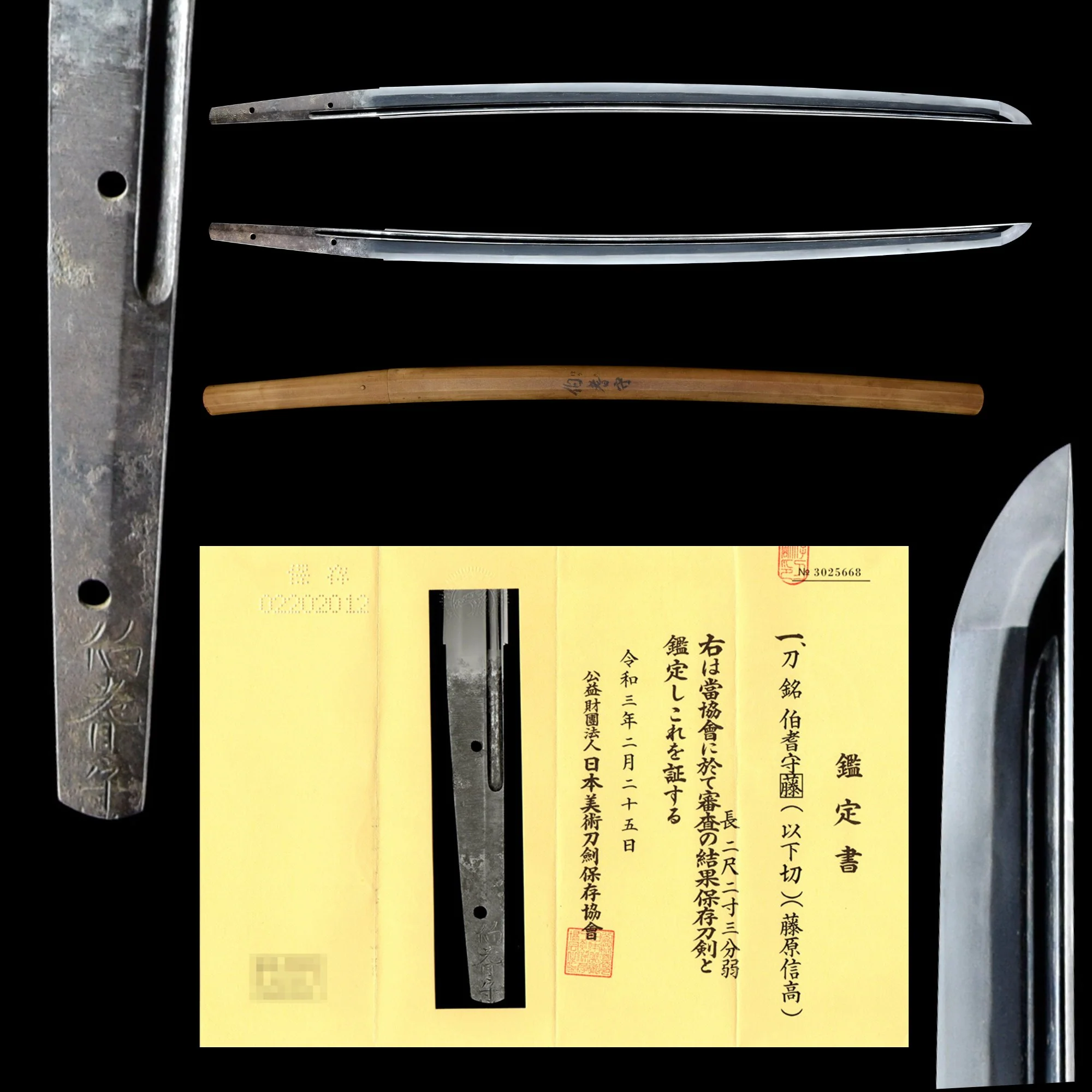
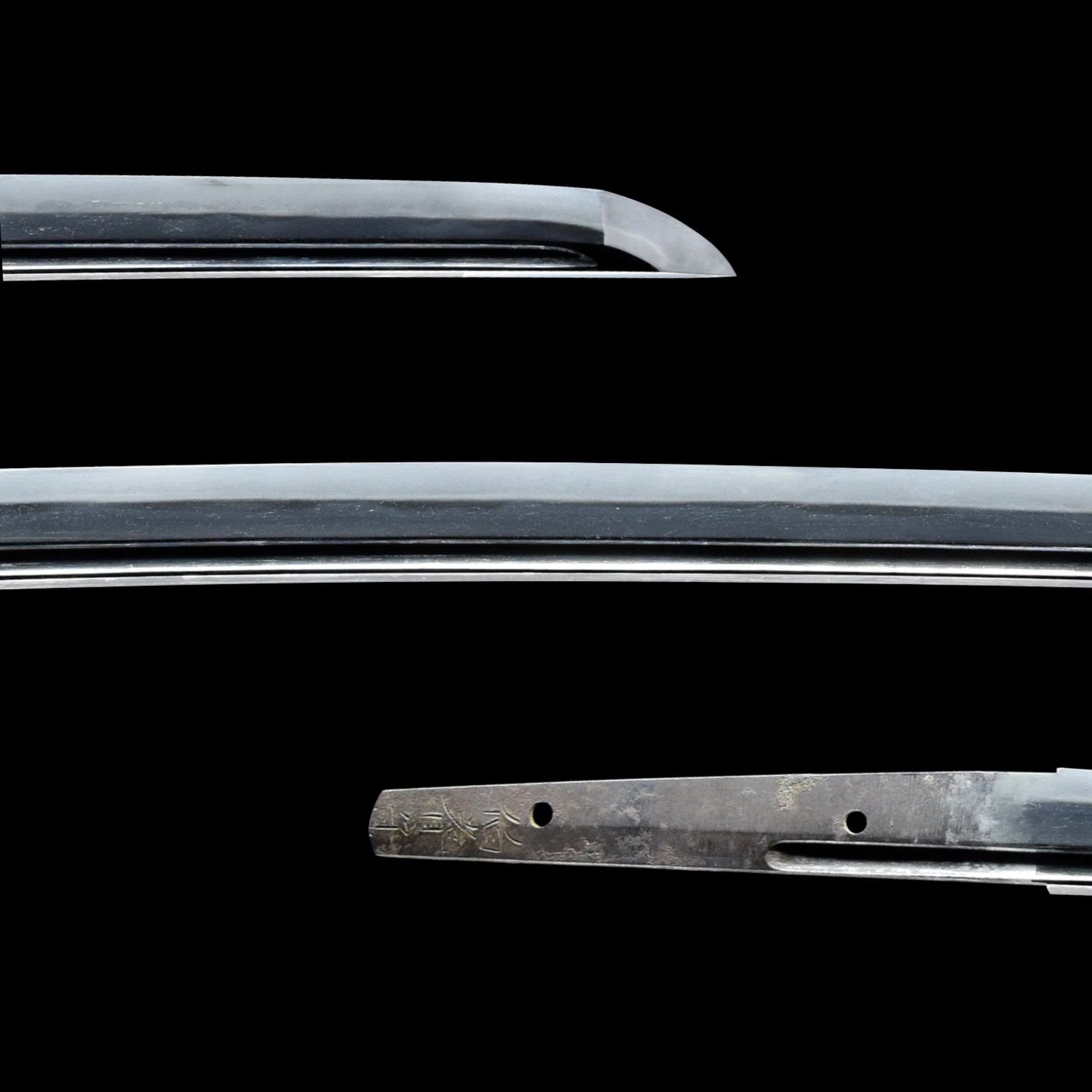
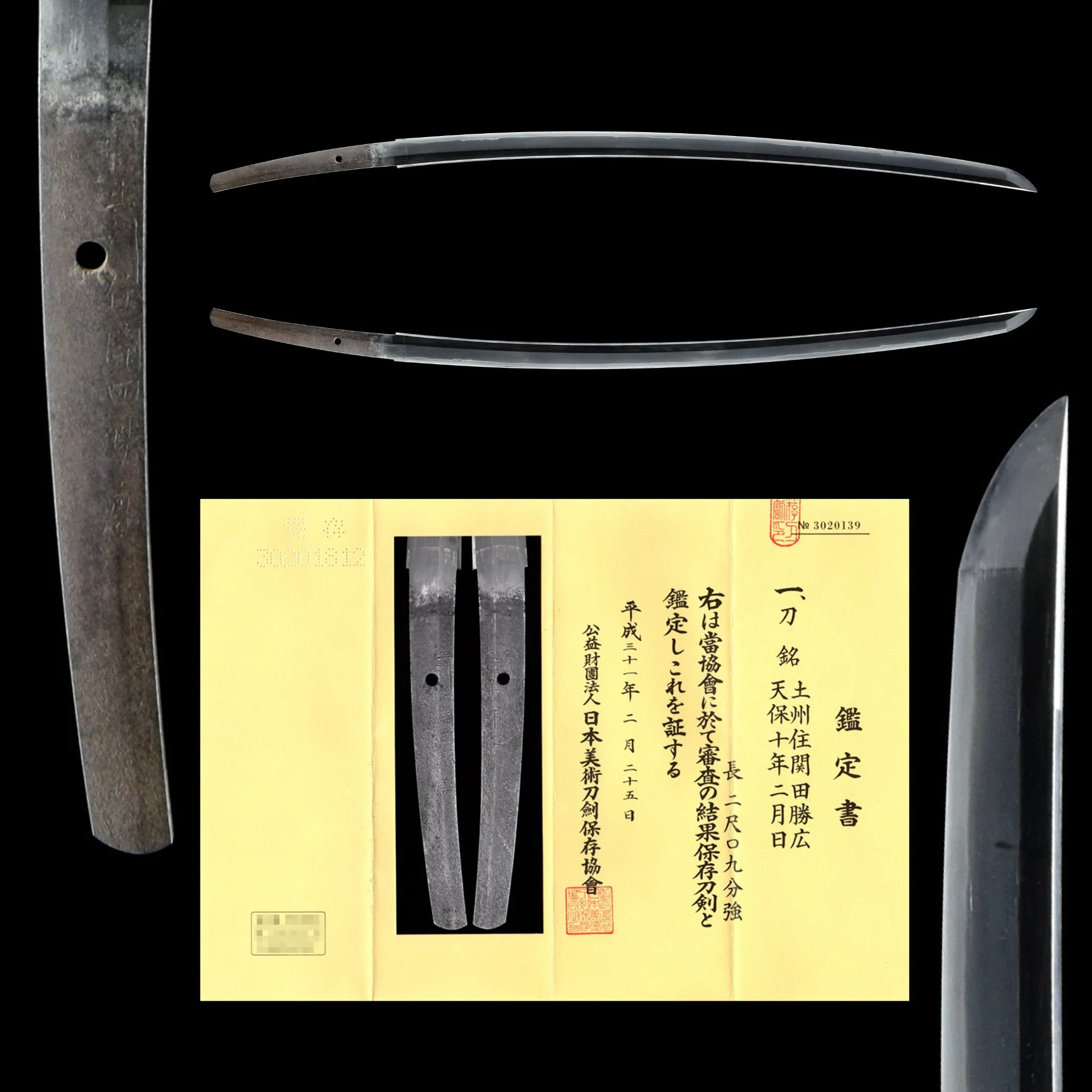
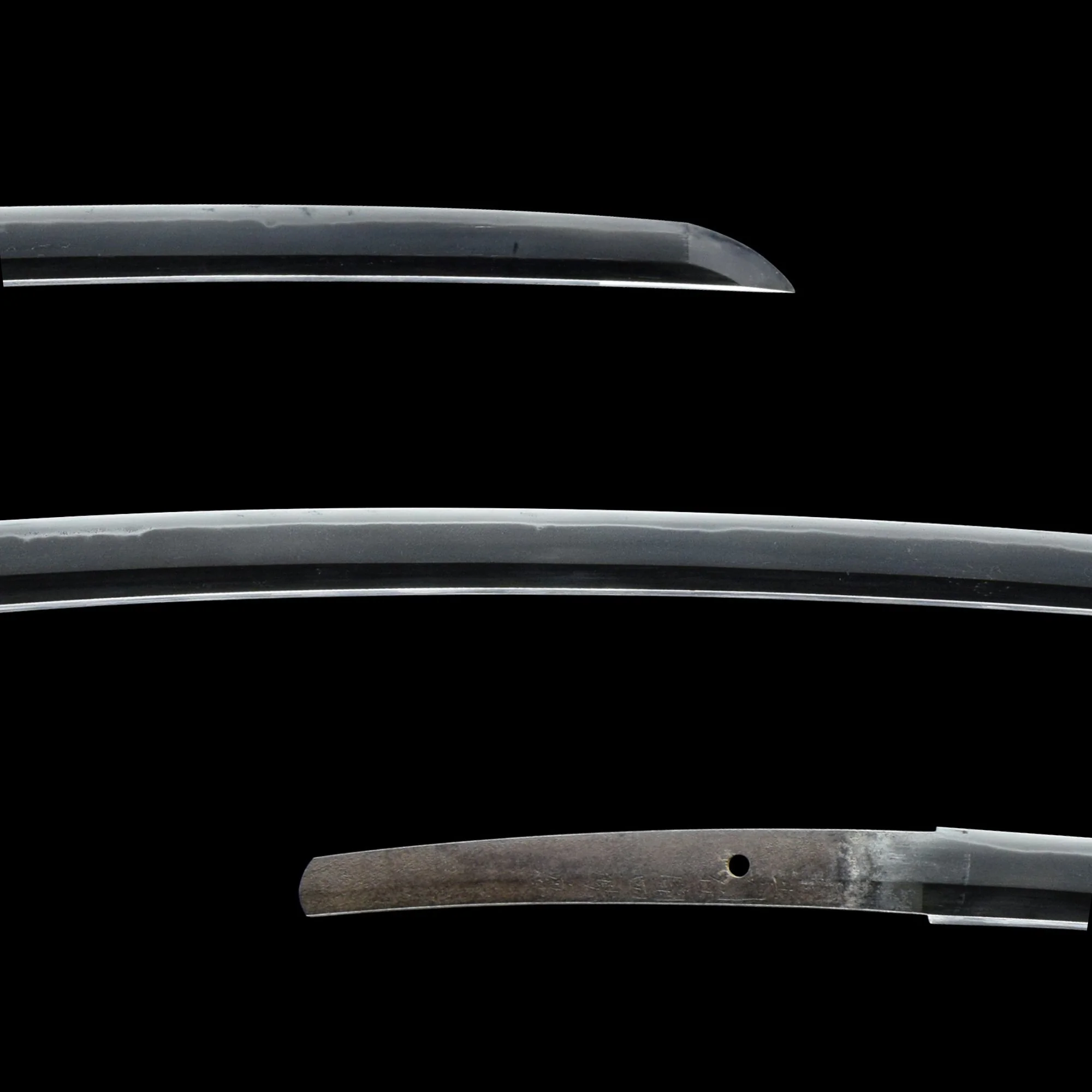
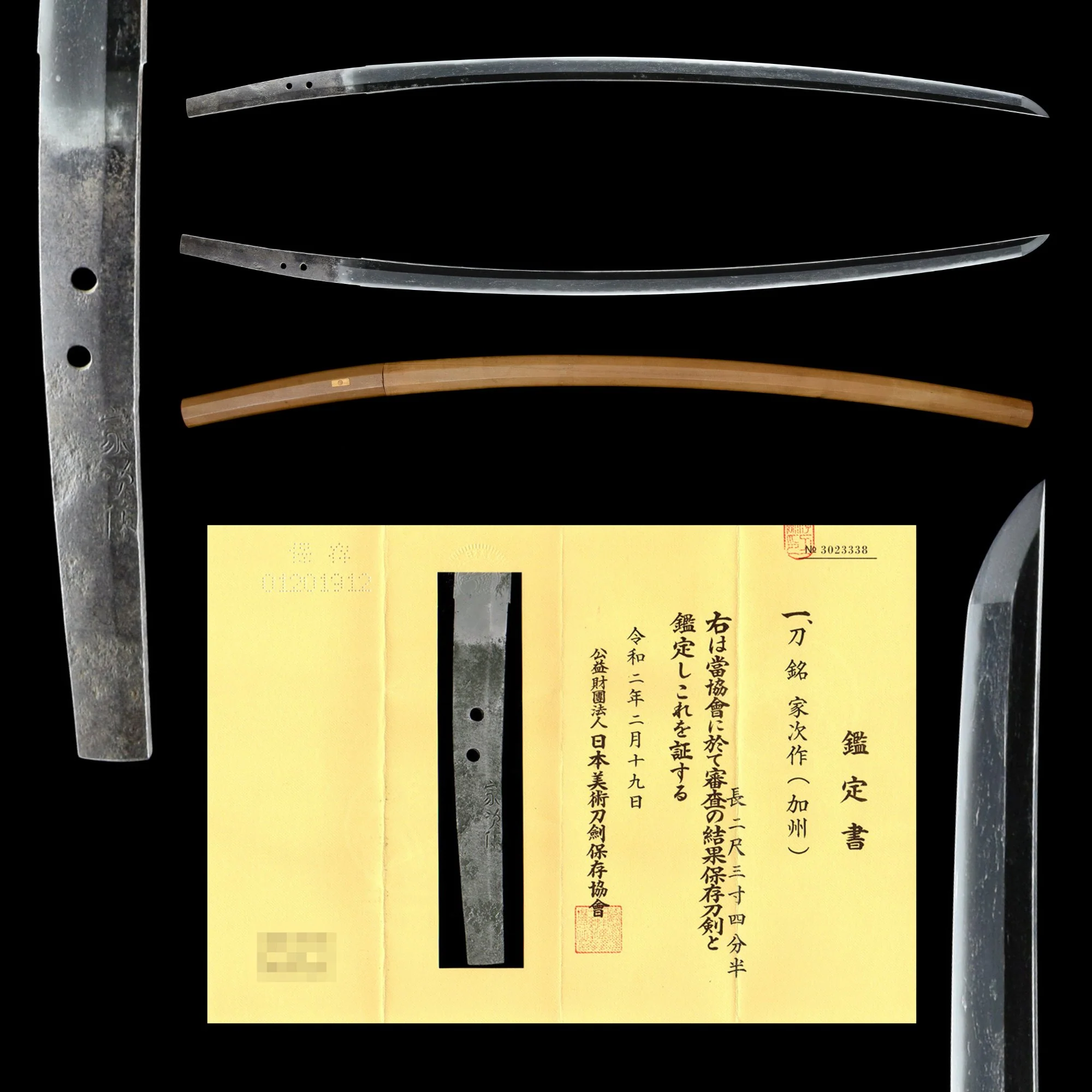
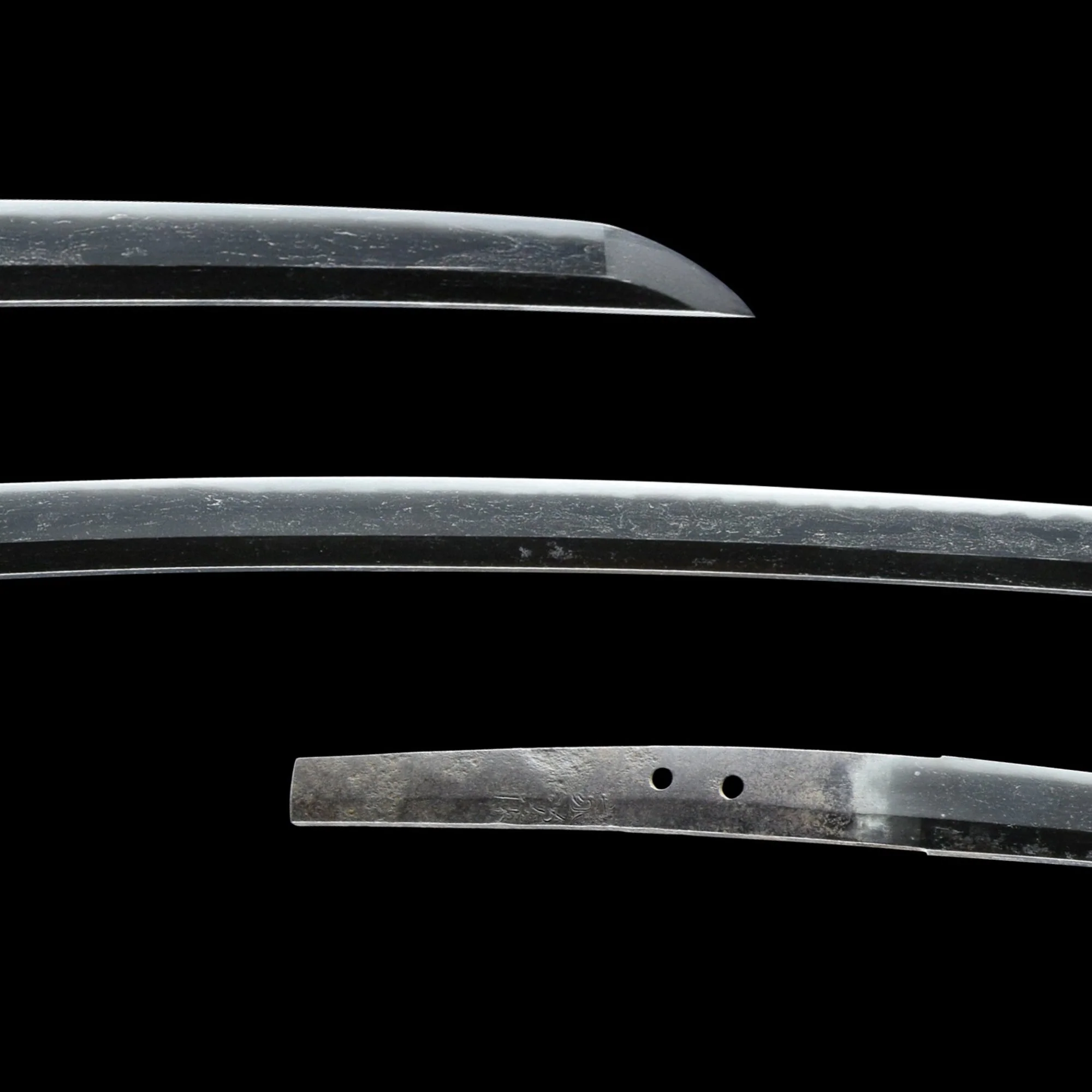
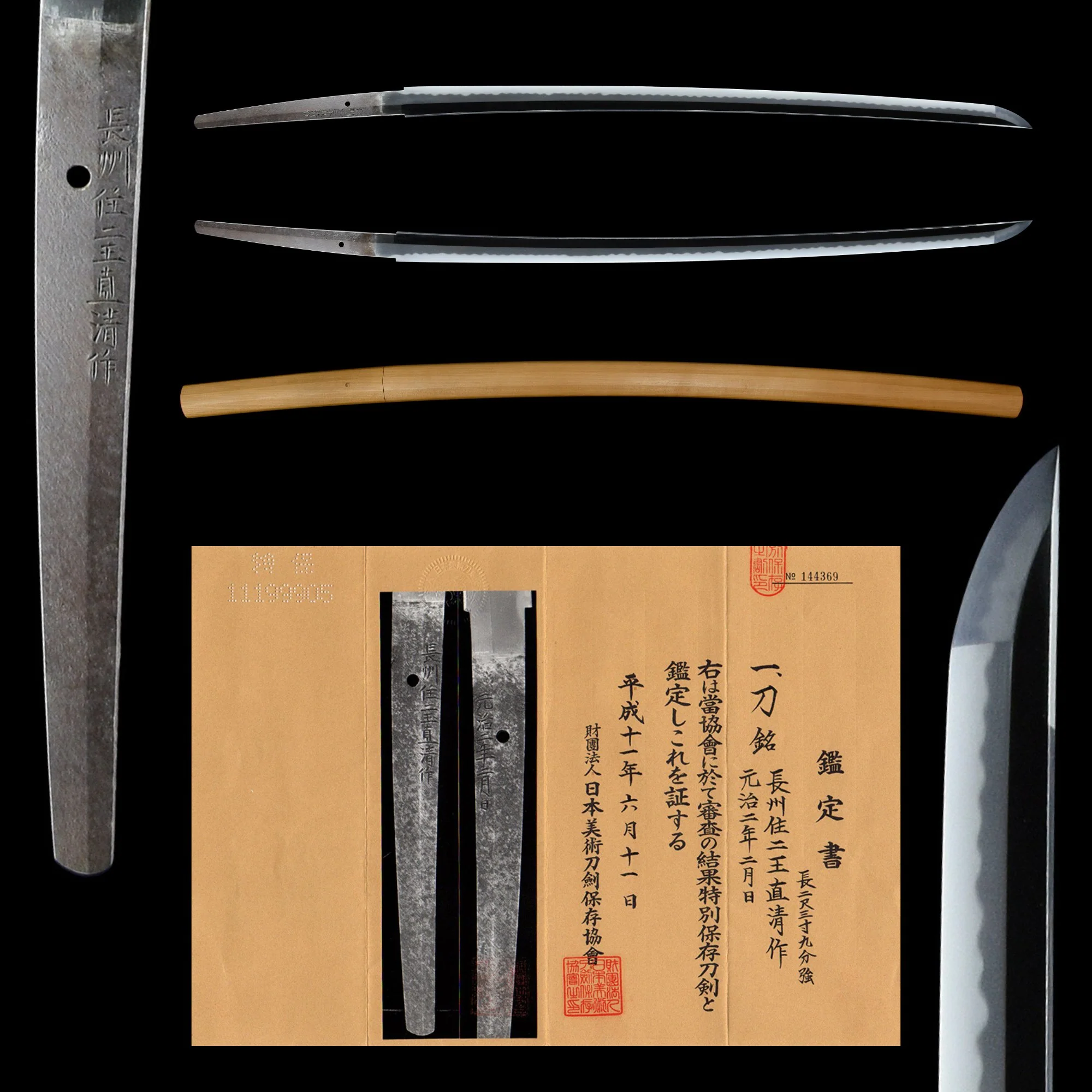
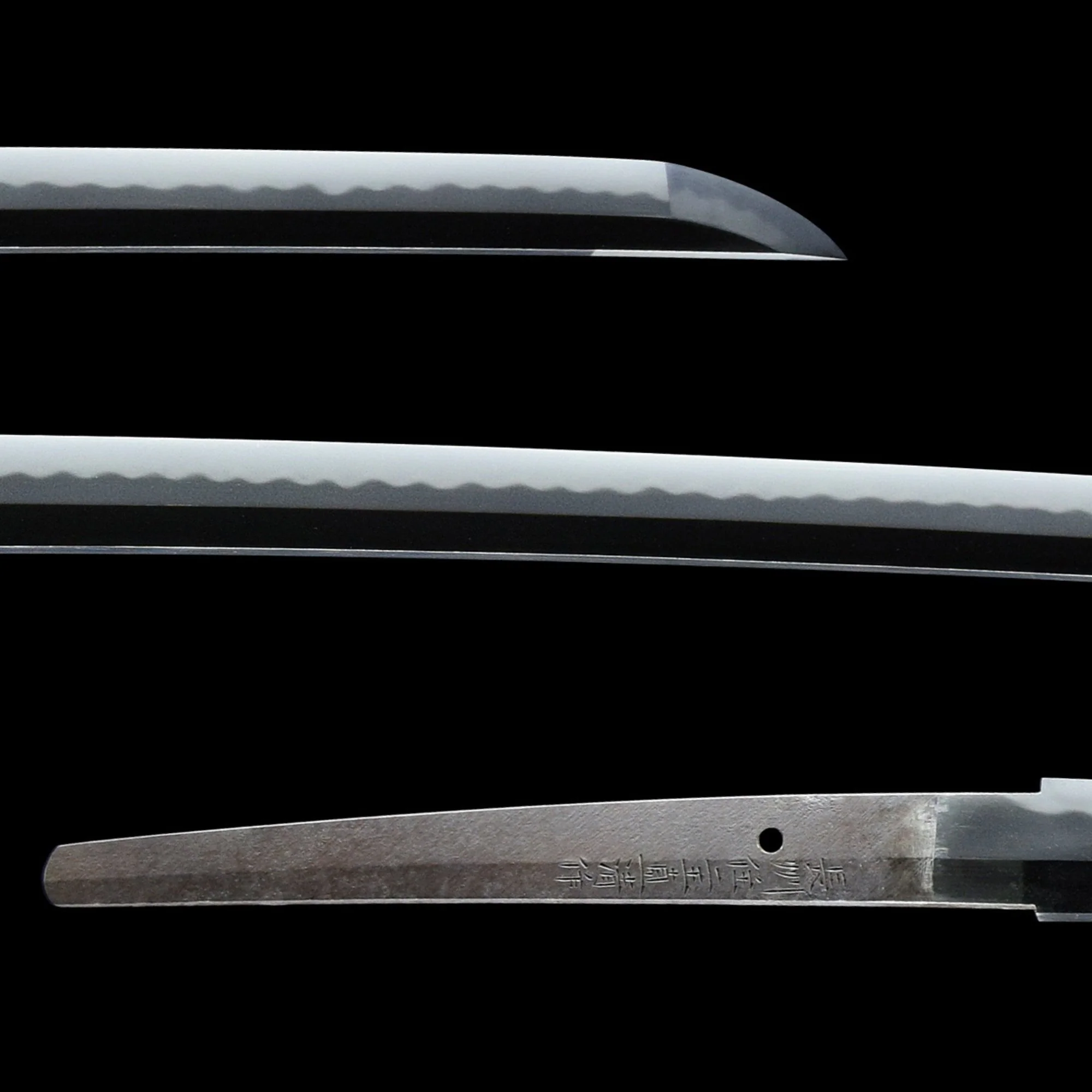
Antique Nihonto Katana Signed by Morimichi NBTHK TOKUBETSU KICHO TOKEN Certificate
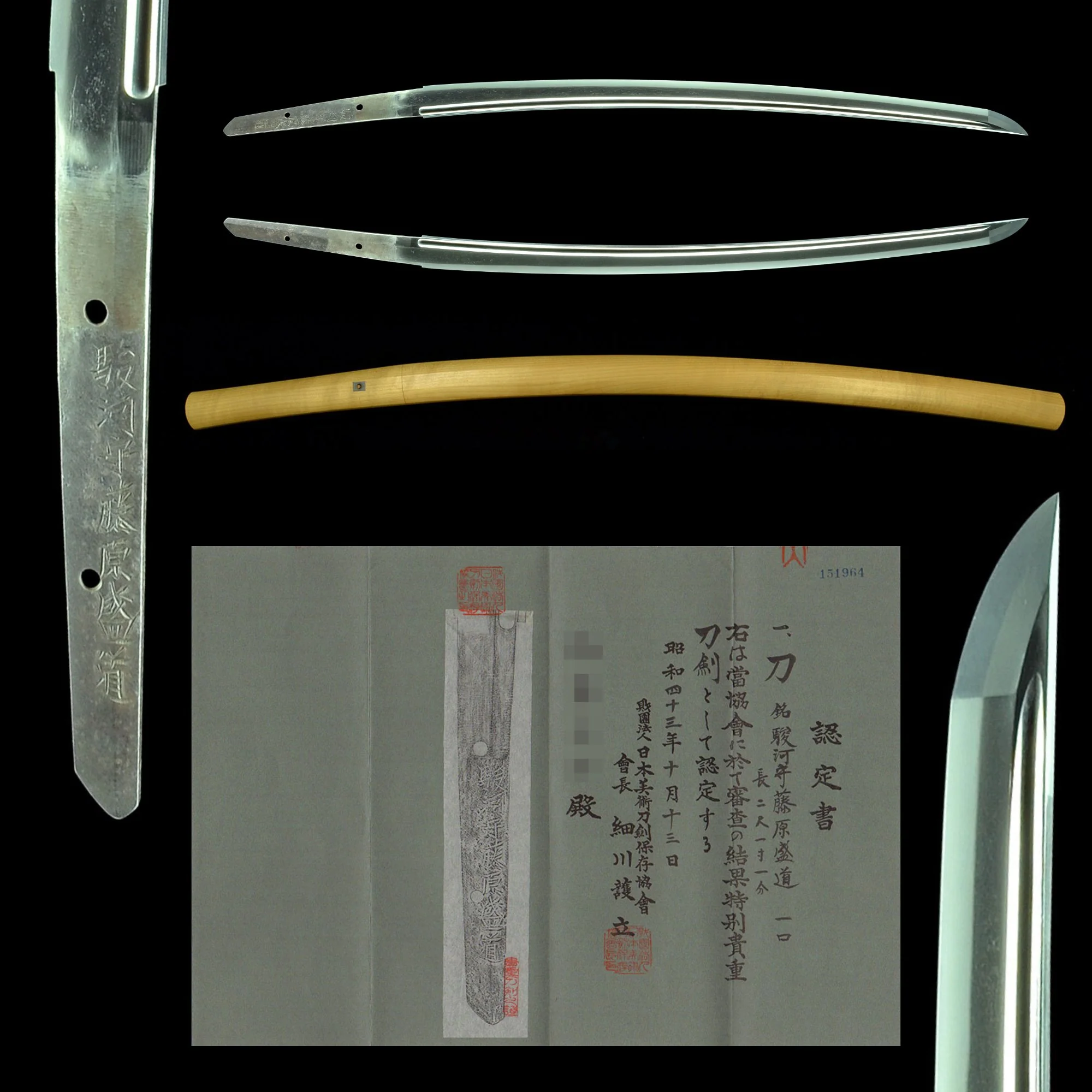
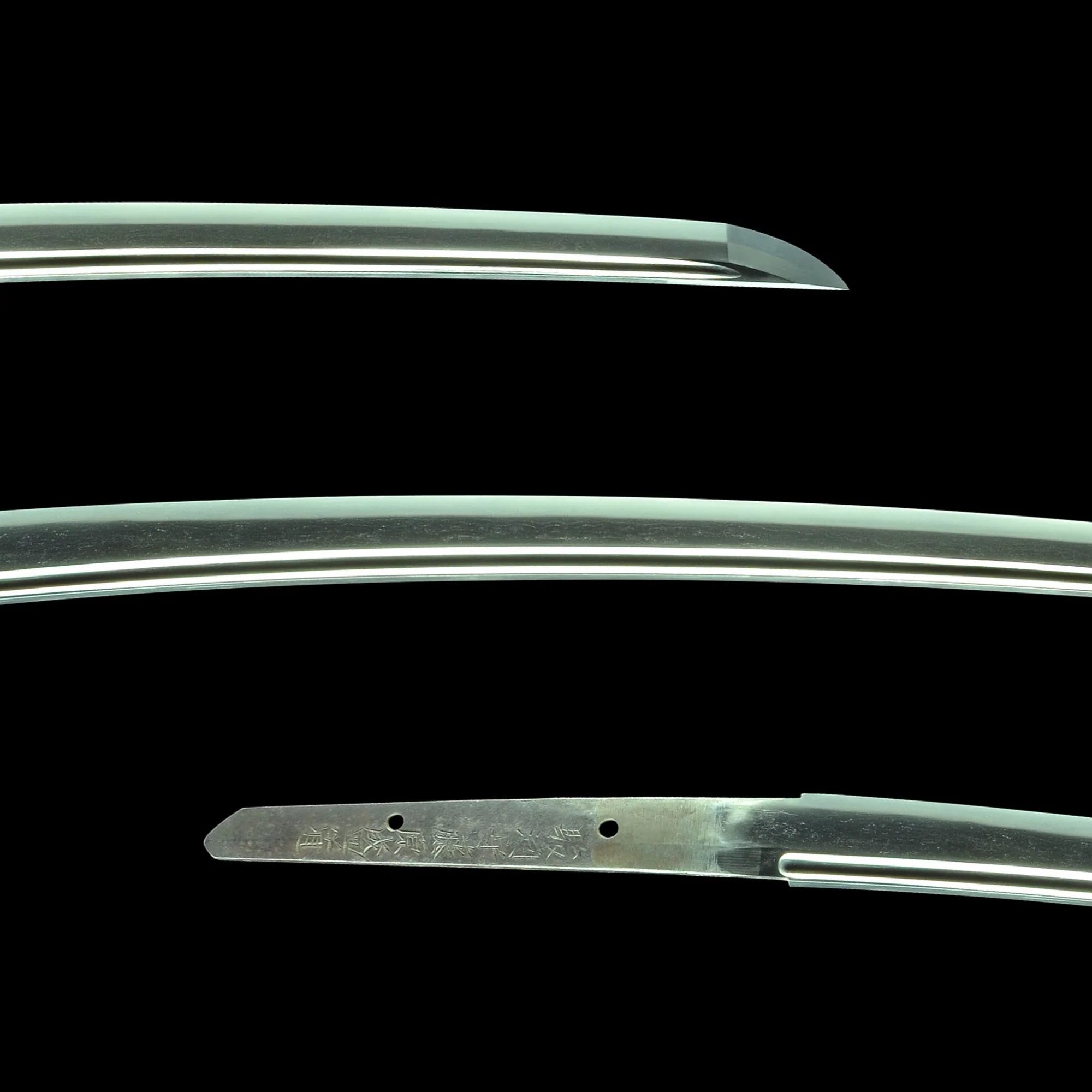
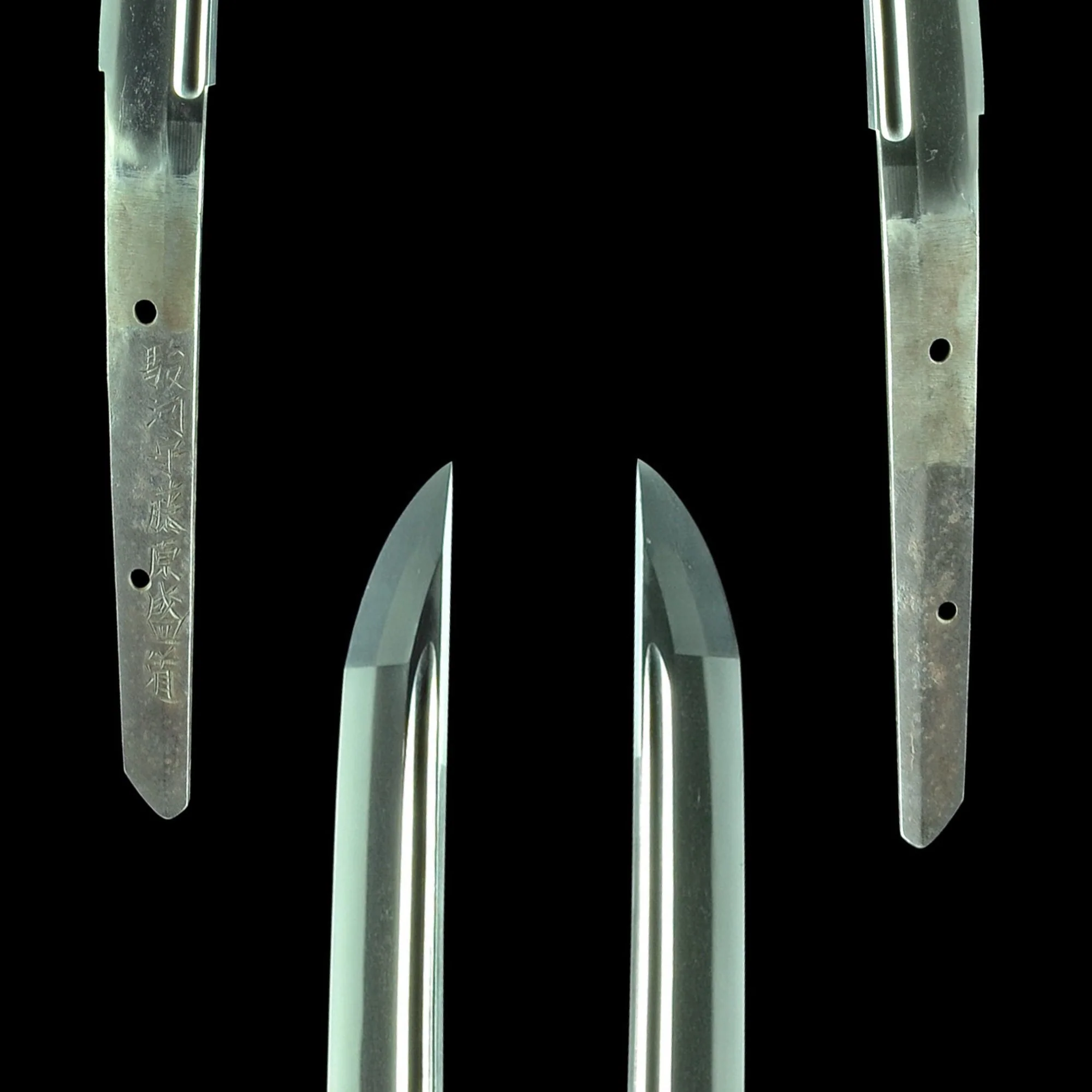
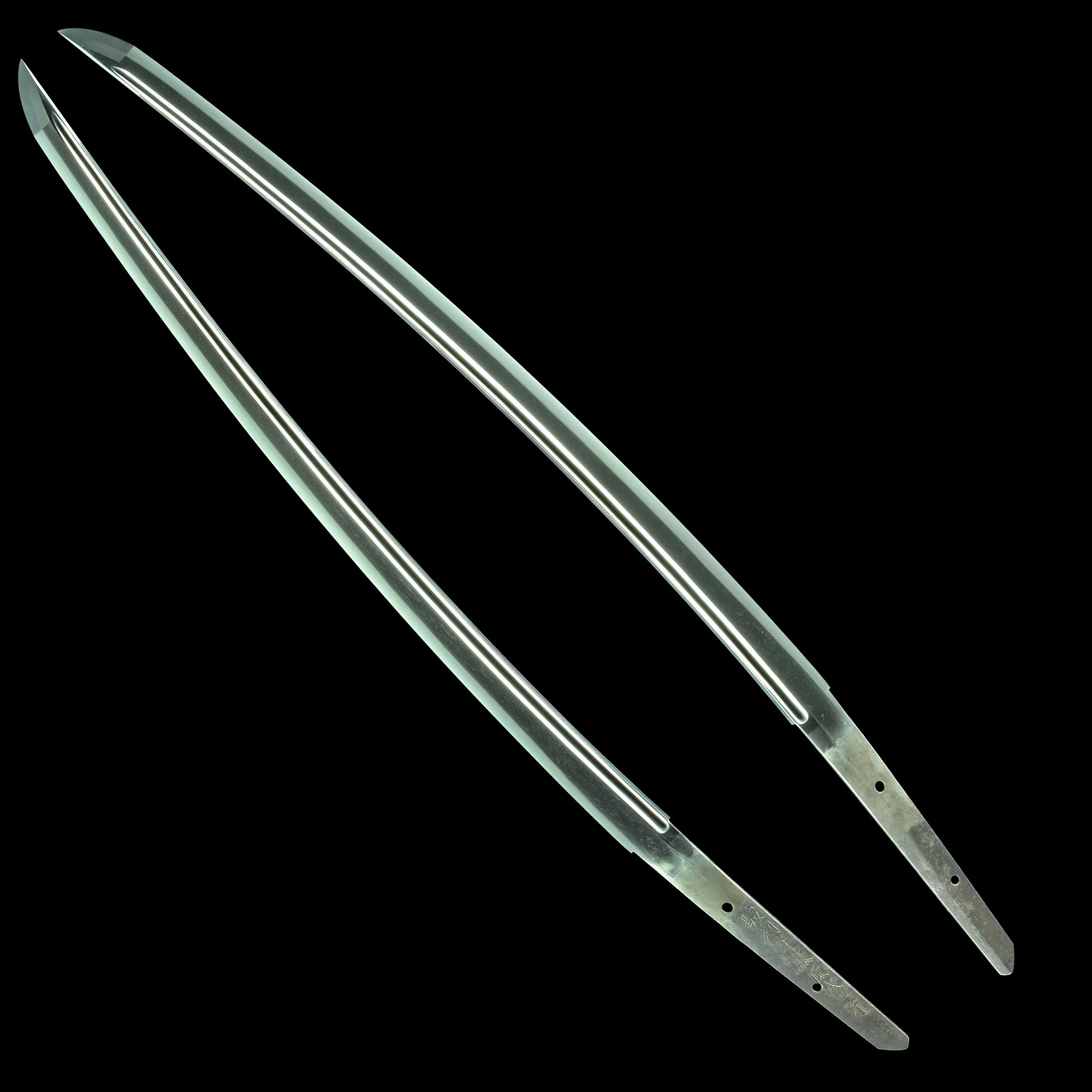
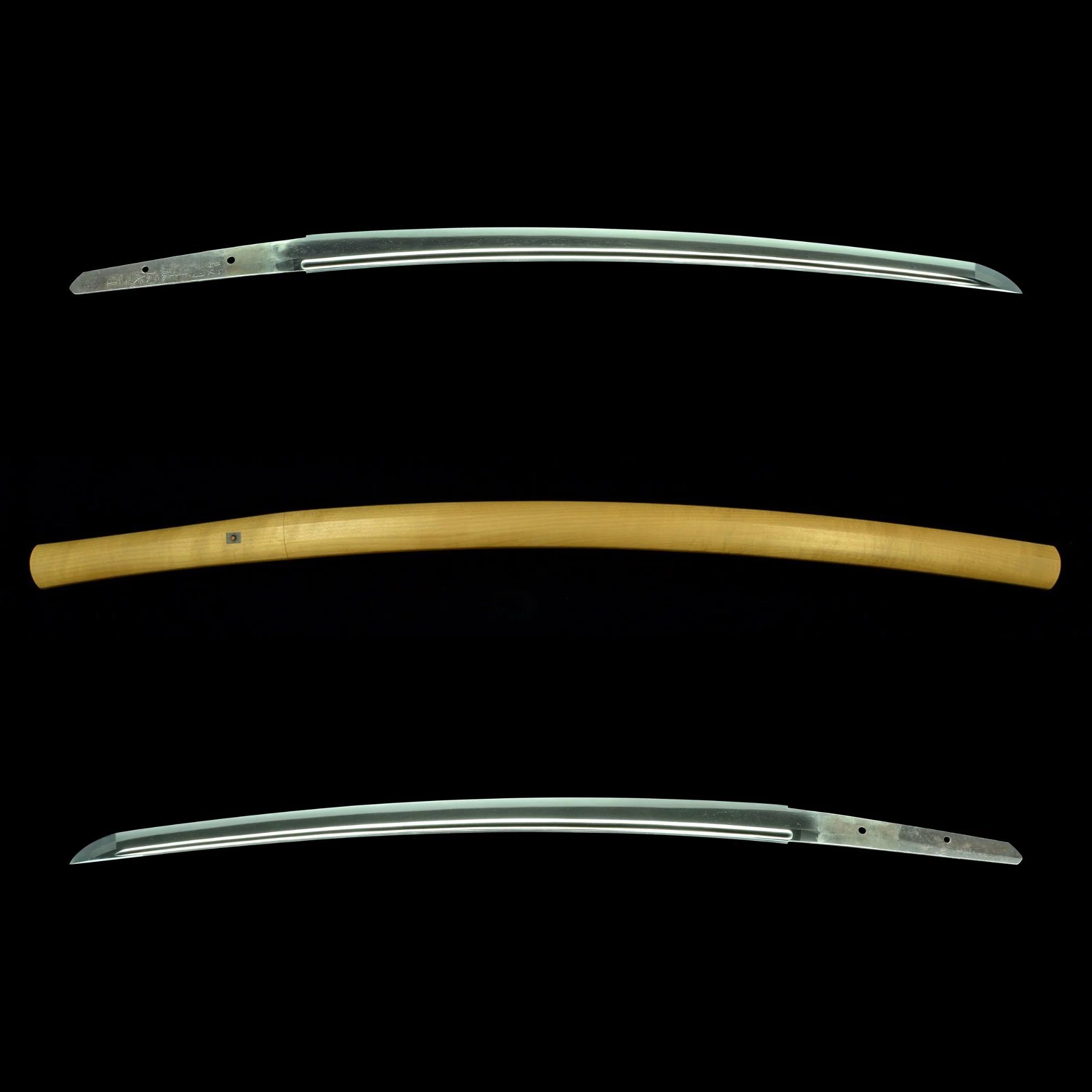
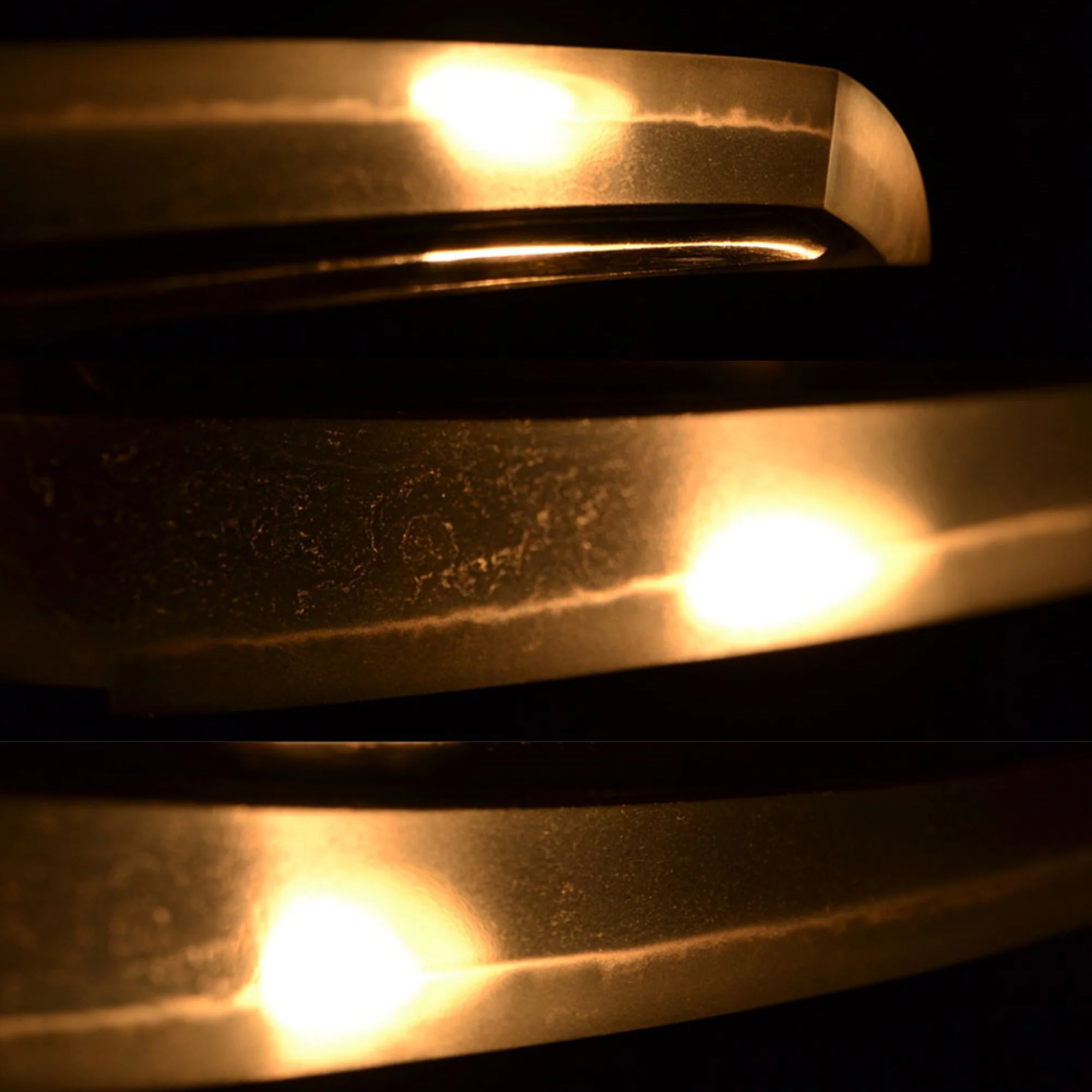
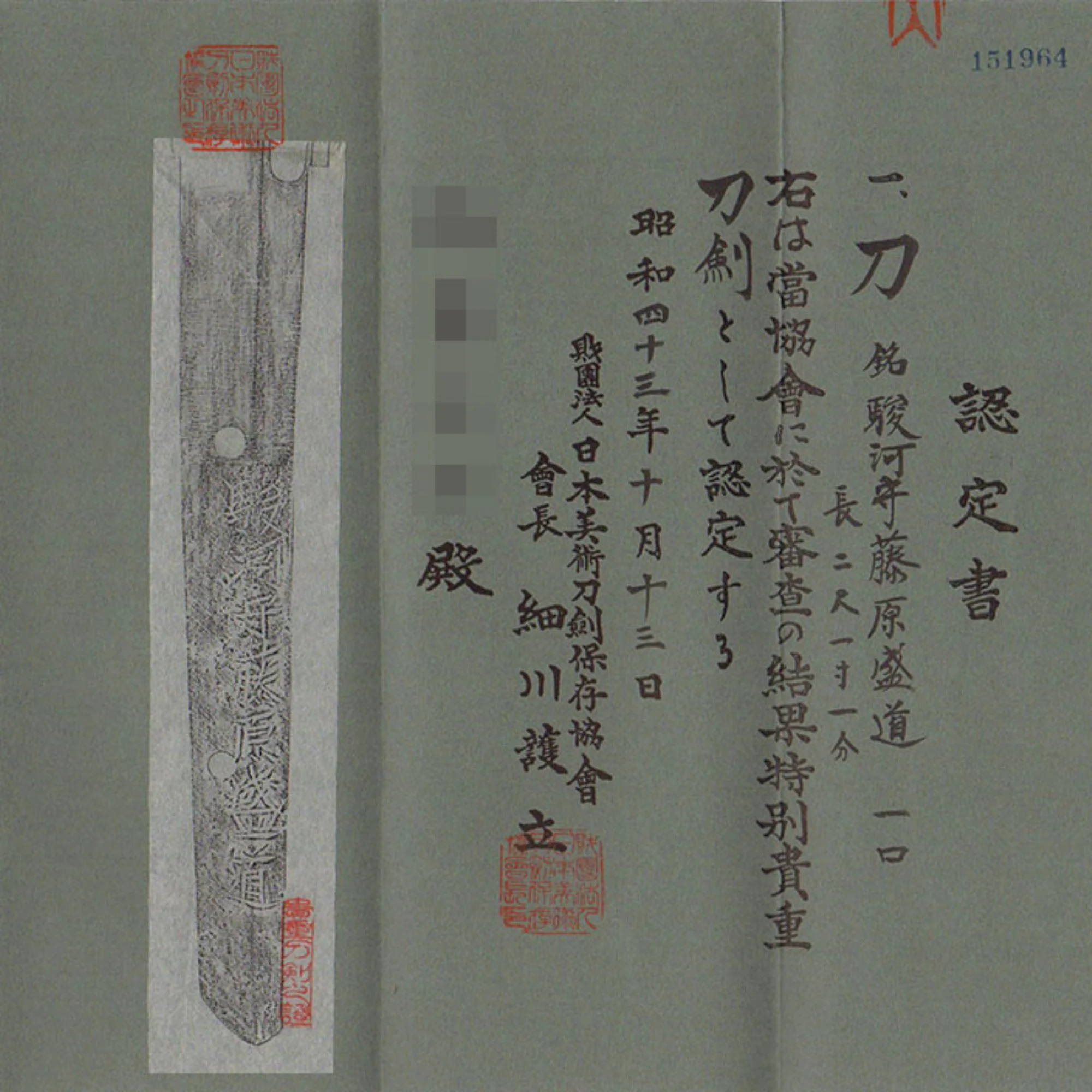
Authentic Nihontō Japanese Sword Katana Signed by Suruganokami Fujiwara Morimichi 駿河守藤原盛道 NBTHK TOKUBETSU KICHO TOKEN Certificate
Nihontō Information
| Name 名称 | 駿河守藤原盛道- Suruganokami Fujiwara Morimichi - |
| Blade Length 刀長 | 二尺一寸九厘 / 63.9 cm |
| Sori 反り | 六分 / 1.83 cm |
| Blade Width 元幅 | 34.0 mm |
| Blade Thickness 元重 | 7.8 mm |
| Tip Width 先幅 | 25.6 mm |
| Tip Thickness 先重 | 6.2 mm |
| Mekugi-ana 目釘穴 | 1個 |
| Age 時代 | 江戸前期 The early period of Edo era(17th century) |
| Certificate 鑑定書 | 特別貴重刀剣認定書(NBTHK TOKUBETSU KICHO TOKEN Certificate) |
| Registration 登録 | 昭和44年9月24日 広島県登録 Registered on September 24, 1969, in Hiroshima Prefecture |
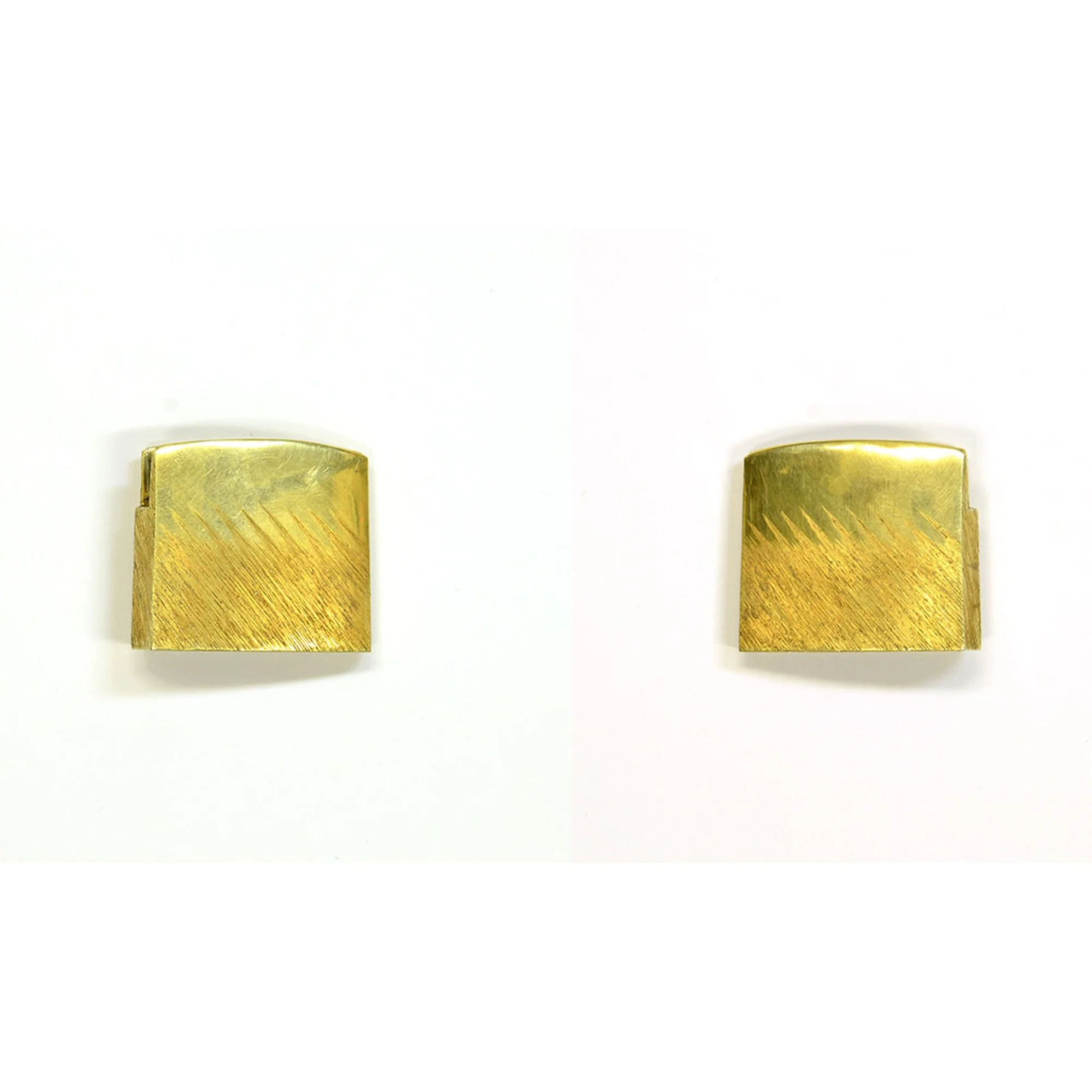
| Included 附属 | - 素銅地金着はばき (Plain copper habaki with gold plating) |
| - 白鞘 (Shirasaya Case) | |


$3,636.57
Antique Nihonto Katana Signed by Morimichi NBTHK TOKUBETSU KICHO TOKEN Certificate—
$3,636.57
Description
Authentic Nihontō Japanese Sword Katana Signed by Suruganokami Fujiwara Morimichi 駿河守藤原盛道 NBTHK TOKUBETSU KICHO TOKEN Certificate
Nihontō Information
| Name 名称 | 駿河守藤原盛道- Suruganokami Fujiwara Morimichi - |
| Blade Length 刀長 | 二尺一寸九厘 / 63.9 cm |
| Sori 反り | 六分 / 1.83 cm |
| Blade Width 元幅 | 34.0 mm |
| Blade Thickness 元重 | 7.8 mm |
| Tip Width 先幅 | 25.6 mm |
| Tip Thickness 先重 | 6.2 mm |
| Mekugi-ana 目釘穴 | 1個 |
| Age 時代 | 江戸前期 The early period of Edo era(17th century) |
| Certificate 鑑定書 | 特別貴重刀剣認定書(NBTHK TOKUBETSU KICHO TOKEN Certificate) |
| Registration 登録 | 昭和44年9月24日 広島県登録 Registered on September 24, 1969, in Hiroshima Prefecture |
| Included 附属 | - 素銅地金着はばき (Plain copper habaki with gold plating) |
| - 白鞘 (Shirasaya Case) | |